'Doomsday Clock' explained as alarming countdown shows it's the closest it has ever been to midnight

Have you ever had that unnerving feeling that bad news is waiting just around the corner? If so, this feeling might not be caused by something as simple as seasonal anxiety or the 'January blues' - it could be due to an enigma known as the 'Doomsday Clock'.
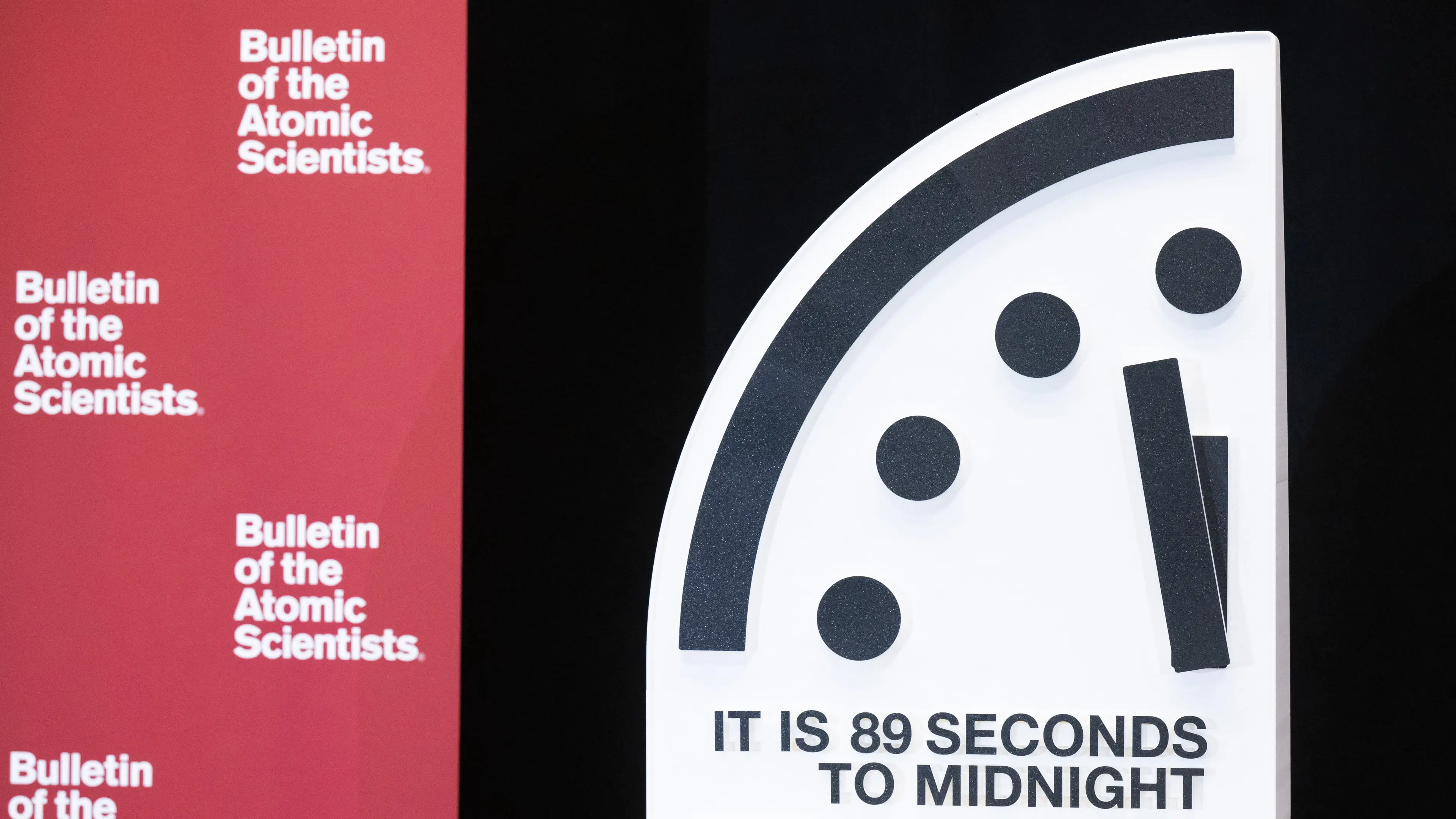
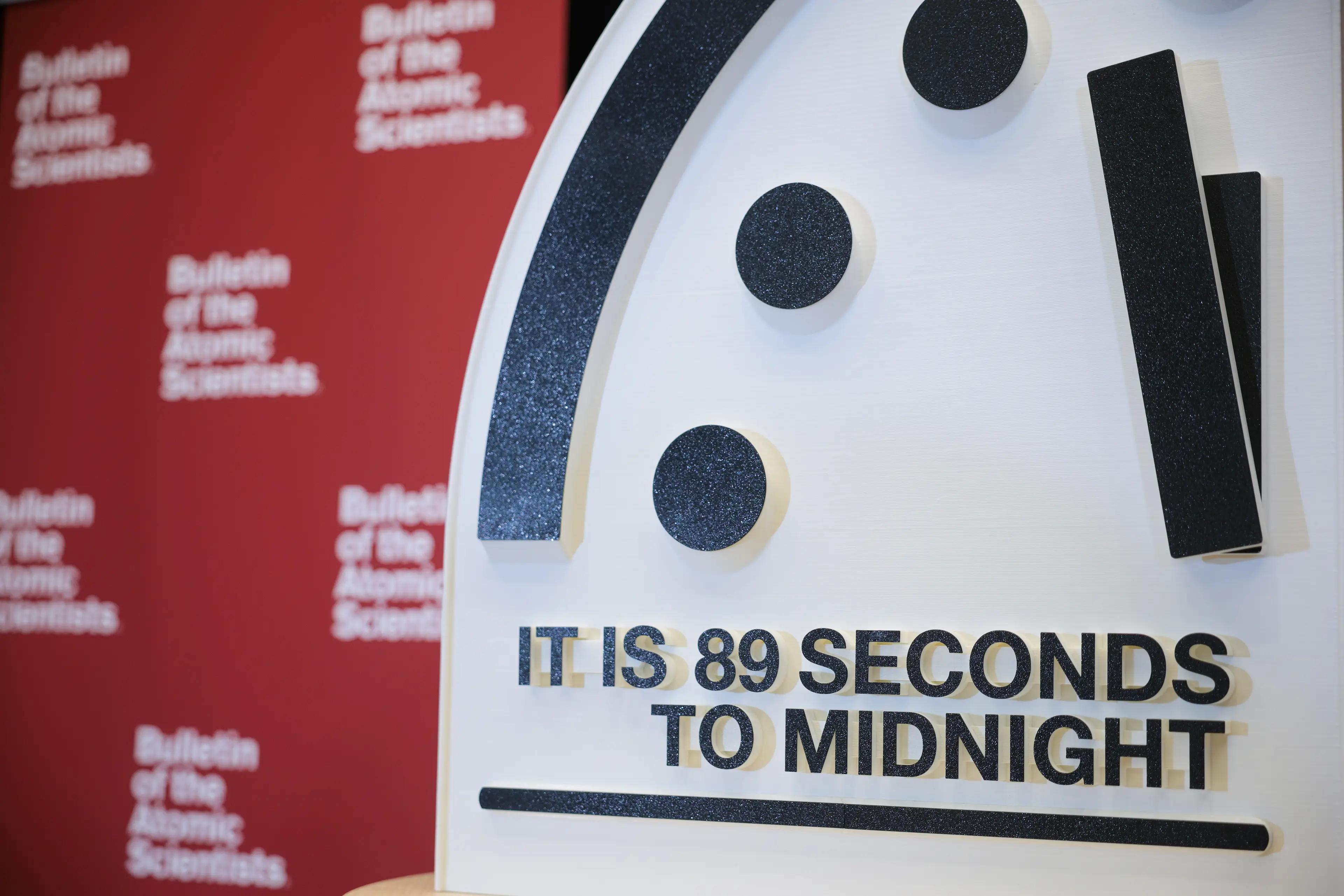
Yep, it's a real thing, and right now, it's reading 89 seconds to midnight - the closest this symbolic countdown has ever been to apocalypse hour.
Its next reading is set to be announced at 10.00am EST Tuesday (27 January), as experts chuck in their two cents on what the final time for 2026 will be (spoiler: it's not good).
But what exactly is the Doomsday Clock, and why is everyone suddenly low-key freaking out about it?
Advert
What is the Doomsday Clock?
The best way to think of this eerie phenomenon is a clock. Literally, a clock.
Instead of tracking your morning alarm snooze, however, the Doomsday Clock keeps on top of how close humanity is to, well, imploding? Shrivelling? Total annihilation?
However you want to put it, the Doomsday Clock counts down how close the human race is to being wiped out for good by our own manmade technological advances. Basically, the hands landing on midnight = boom, splat, gone.
When was the Doomsday Clock created?
The Doomsday Clock was first created by artist Martyl Langsdorf for The Bulletin of the Atomic Scientists magazine in 1947 to warn the world about how scary things like nuclear war could get.
At the time, the clock was set at seven minutes to midnight.
Over the years, though, the threat devolved from nukes to include other threats, like climate change, bioweapons, AI risks and all things in between.
And when the Bulletin’s Science and Security Board meets every year, they decide whether to move the hands closer or farther from midnight.
What did the Doomsday Clock read last year?
The hands have been reset every year since its creation, and last year, the Doomsday Clock was moved to 89 seconds to midnight, which was seen as a terrifying prospect at the time, given it was the closest it had ever been.
"Despite unmistakable signs of danger, national leaders and their societies have failed to do what is needed to change course," the announcement read.
"In setting the Clock one second closer to midnight, the Science and Security Board sends a stark signal.
"Because the world is already perilously close to the precipice, a move of even a single second should be taken as an indication of extreme danger and an unmistakable warning that every second of delay in reversing course increases the probability of global disaster."
Prior to that, it stood at 90 seconds.
What will the Doomsday Clock read for 2026?
Though the final time is yet to be unveiled, experts predict the hands are likely to be moved closer to midnight.
Alicia Sanders-Zakre, head of policy at the International Campaign to Abolish Nuclear Weapons, told the Daily Mail the clock could be moved 'by at least one second'.
"Our biggest concern is the existential threat posed by the more than 12,000 nuclear weapons in the world today," she said.
"While the risk of nuclear use has been an existential threat for 80 years, it has increased in the last year, due to skyrocketing investments in nuclear arms, increasingly threatening nuclear rhetoric and actions and the increasing application of artificial intelligence in militaries."
The tiny change might sound subtle, but Bulletin leaders believe it's far from a laughing matter.
In fact, they attribute the nearing of the apocalypse to man's inability to handle major threats like nuclear tensions between global powers, catastrophic climate shifts, the rapid rise of AI and other emerging technologies, and increasing biological risks from pandemics or engineered pathogens.
Topics: World News, News, Politics, Explained, Science, Technology, Artificial intelligence
 Rhianna Benson