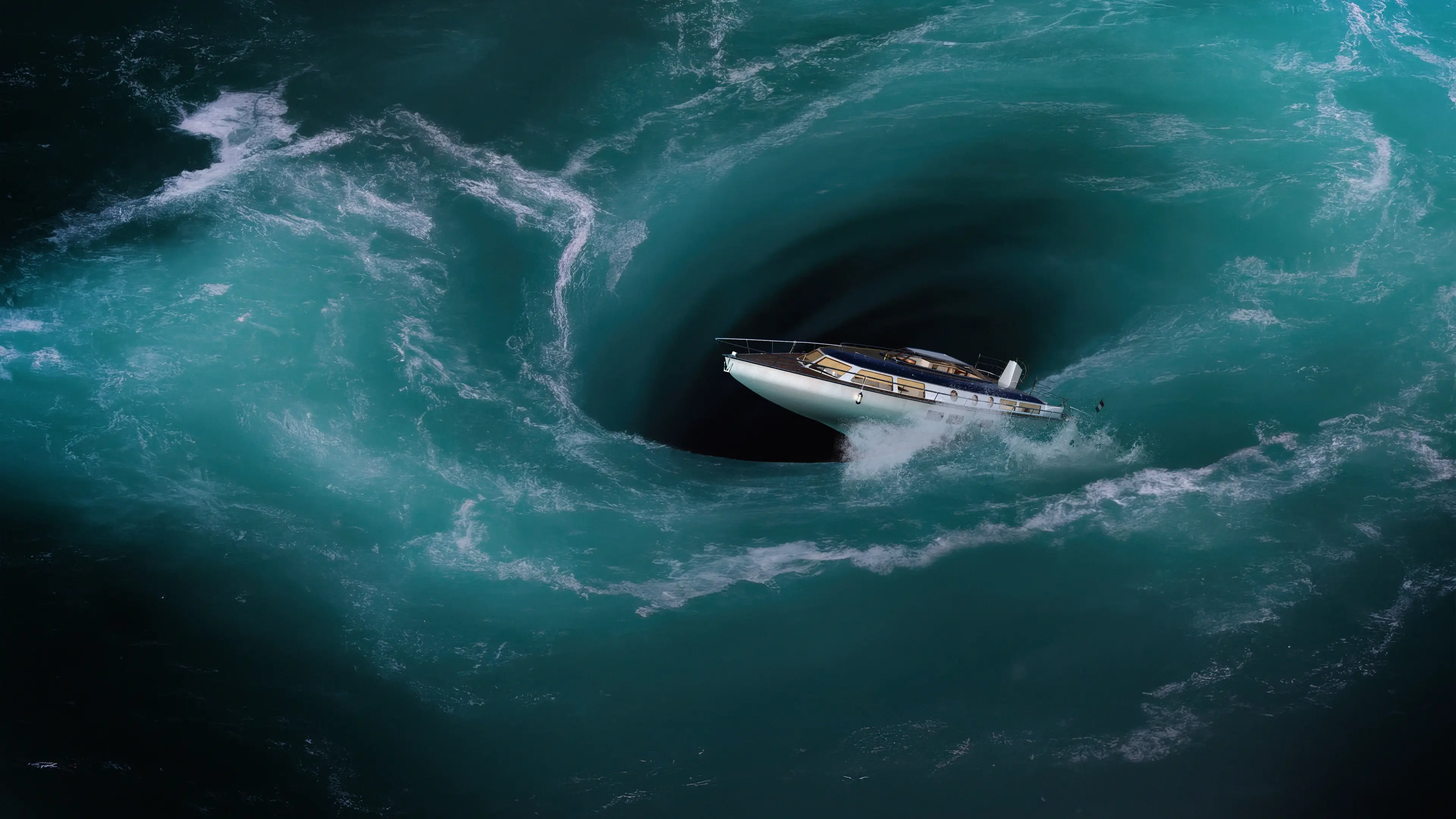
Bermuda Triangle leaves scientists bemused after making surprising discovery

Despite living in this hyper-modern world, there are still a number of things on this planet that continue to be a total mystery.
Just a handful of unexplained phenomena include Australia's bubblegum-pink lake, a blood-red waterfall in Antarctica and, of course, the infamous Bermuda Triangle.
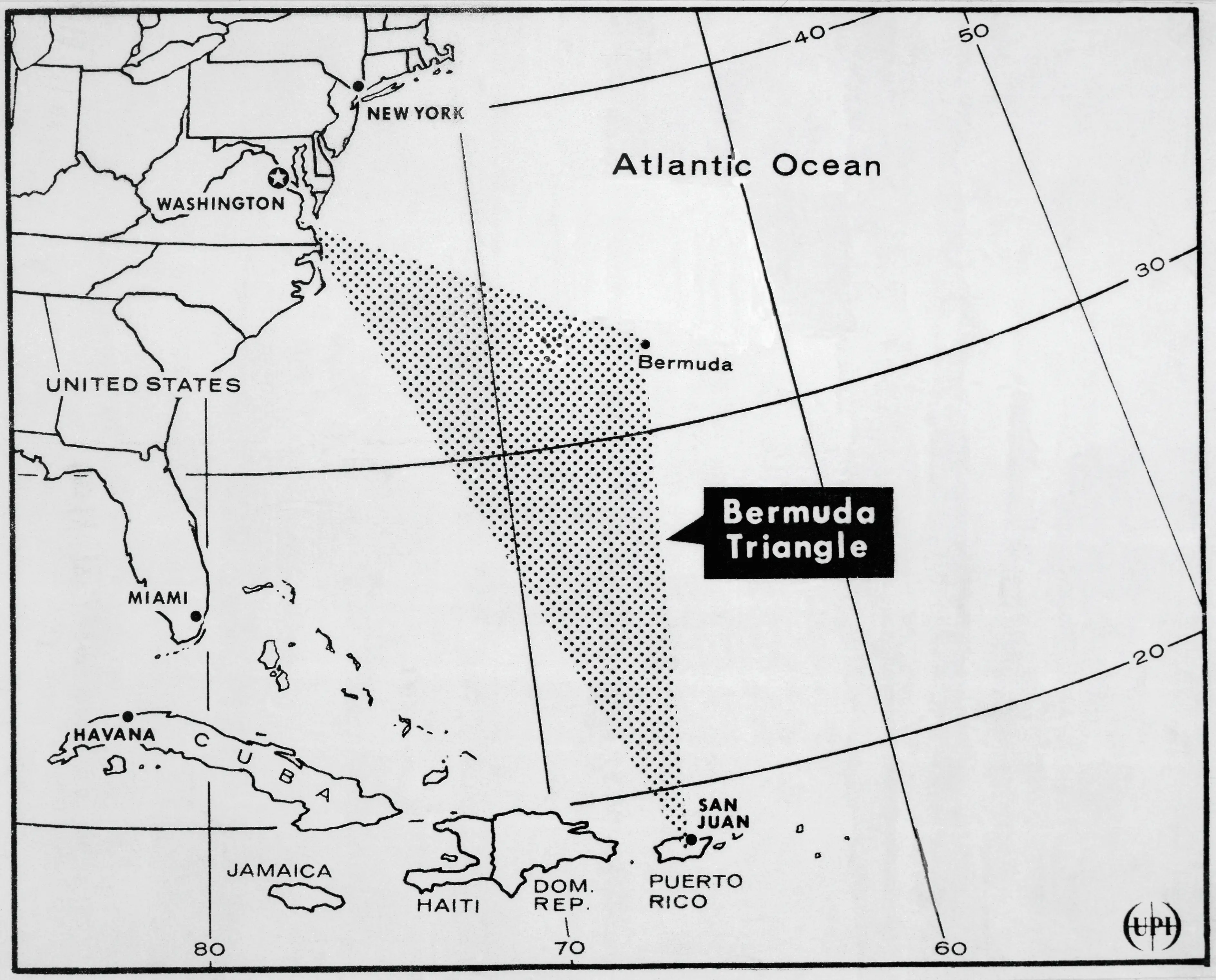
Now, the Bermuda Triangle, also known as the Devil's Triangle, is a loosely defined region in the North Atlantic Ocean, roughly bounded by Florida, Bermuda and Puerto Rico.
Over the past several centuries, more than 50 ships and 20 planes are said to have disappeared in the allegedly 'paranormal' area now referred to as the Bermuda Triangle, according to Go To Bermuda.
Advert
While it's reportedly not dangerous anymore, what with today's modern ships, airplanes, and weather forecasting ensure safe passage across this section of ocean, explanations over the years have included weather, rogue waves, or more fanciful theories.
For example, in Charles Berlitz's best-selling book The Bermuda Triangle (1974), he suggested that the fabled lost island of Atlantis was to blame for all the bizarre goings on.
But now, once again, the Bermuda Triangle has left scientists totally bemused after making a very surprising discovery.
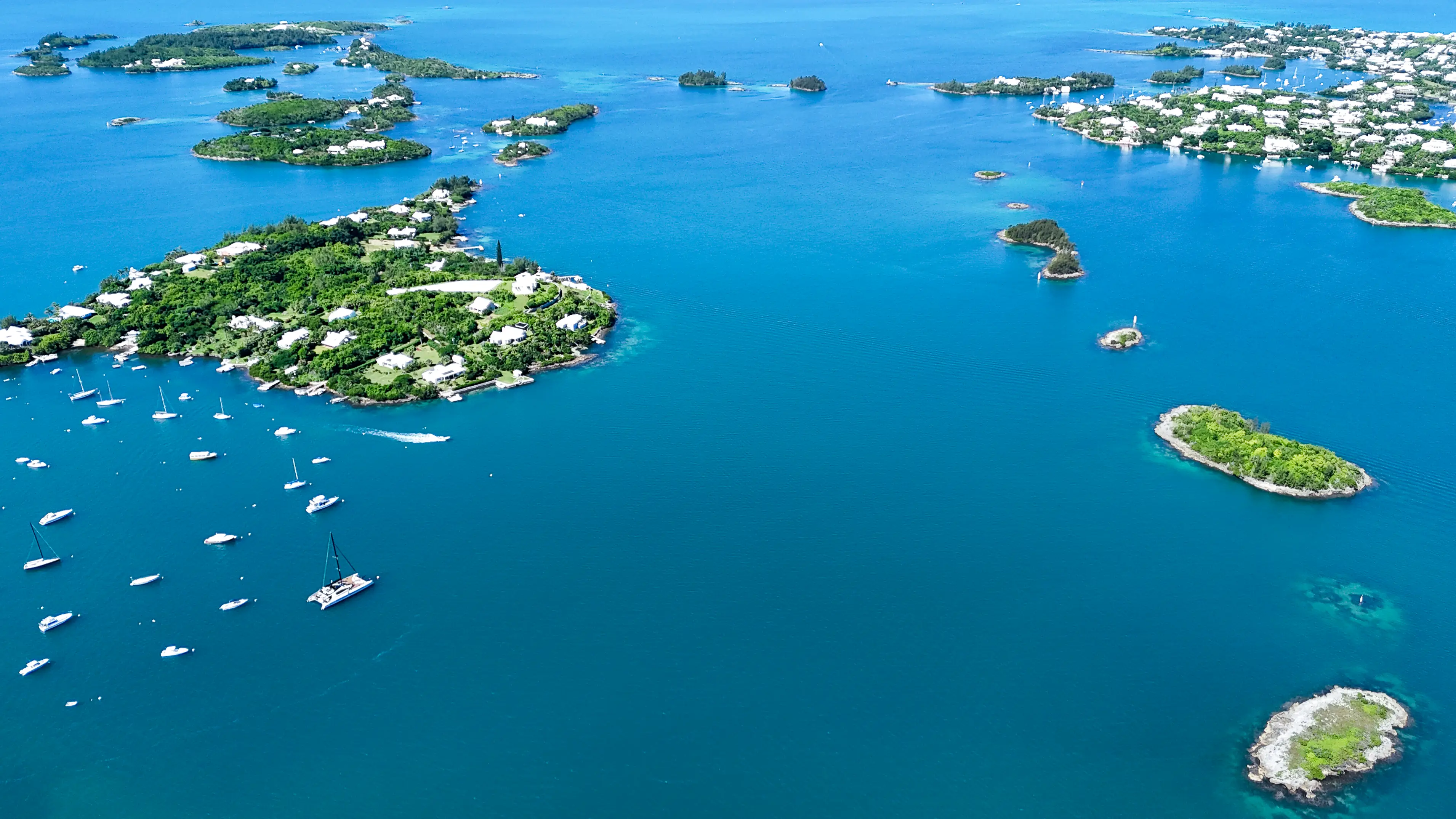
Scientists have found something 'unlike anything else on Earth' beneath the island of Bermuda.
By probing deep underground, they were able to find a mysterious 12.4-mile-thick layer of rock which sits just below the oceanic crust.
Dr William Frazer, a seismologist at Carnegie Science in Washington, DC, and Yale University Professor Jeffrey Park made the discovery by analysing seismic waves from distant earthquakes recorded at a station on Bermuda.
"Typically, you have the bottom of the oceanic crust, and then it would be expected to be the mantle," said Frazer, speaking to Live Science.
"But in Bermuda, there is this other layer that is emplaced beneath the crust, within the tectonic plate that Bermuda sits on," he continued.
By tracking how these waves changed as they passed through rock, up to 31 miles beneath the island, the pair identified this new layer, one that's roughly twice as thick as anything seen under other islands.
Now, Bermuda sits on an oceanic swell, a broad rise in the seafloor that lifts it above the surrounding ocean basin. Such swells usually come from volcanic activity. Once a tectonic plate drifts away from one of these hotspots, the uplift normally fades, and the seafloor sinks back down but Bermuda breaks that pattern.
While the tropical island has been volcanically quiet for about 31 million years, the swell beneath it refuses to subside. There is no sign of the mantle plume you would expect under a volcanic island, and no evidence of any active process keeping the crust elevated.
Instead, researchers have identified a layer that is about 1.5 per cent less dense than the surrounding upper mantle.
That slight buoyancy matters as the layer effectively floats within the mantle, pressing upward and holding the crust aloft.
"Typically, you have the bottom of the oceanic crust and then it would be expected to be the mantle," Frazer explained. "But in Bermuda, there is this other layer that is emplaced beneath the crust, within the tectonic plate that Bermuda sits on."
The experts reckon the final volcanic eruption 31 million years ago may have injected molten rock into the crust, where it froze in place. This frozen material now raises the ocean floor by roughly 500 metres.
Sarah Mazza, a geologist at Smith College who wasn't involved in the study, has been researching Bermuda's volcanic past, explained to the outlet: "There is still this material that is left over from the days of active volcanism under Bermuda that is helping to potentially hold it up as this area of high relief in the Atlantic Ocean."
Mazza believes this carbon was pushed deep into the Earth when the supercontinent Pangea formed between 900 million and 300 million years ago.
"The fact that we are in an area that was previously the heart of the last supercontinent is, I think, part of the story of why this is unique," she added.
 Rhiannon Ingle