
What being 'brain-dead' actually means after woman on life support had baby delivered prematurely by doctors

There have been a number of ethical questions popping up after Adriana Smith's devastating birth made headlines earlier this year.
For those who aren't familiar, Smith, 31, from Atlanta, Georgia, was tragically pronounced brain dead after having a medical emergency while pregnant in February.
She was controversially kept alive by doctors who delivered her baby prematurely via C-section in June, before she was taken off life support, and her funeral was held later that month.
Her newborn son, Chance, is being kept in the neonatal intensive care unit after weighing just 1lb 13oz (0.8kg) at birth.
Advert
Adriana's family heartbreakingly claimed they had no say in what happened to her, nor the foetus inside her, and it was all because of Georgia's abortion laws.
The extremely controversial law dubbed the 'heartbeat law' prohibits the termination of any pregnancy after six weeks of gestation following the 2022 overturn of Roe v. Wade.

It outlines that no abortion can be carried out if there is a 'detectable human heartbeat', except in the event of a 'medical emergency or medically futile pregnancy'.
Termination of the pregnancy can only be performed 'to save the pregnant person's life', to 'preserve' the woman's 'physical health' and 'if the foetus is not expected to survive the pregnancy'.
Also playing a part were the 'fetal personhood' laws, which define a foetus, at times from the moment of conception, as a legal person with rights equal to or similar to those of a born human being.
As we say, the story has sent shockwaves around the world and raised questions, one of which being - what does it actually mean to be 'brain-dead'?
What it means to be 'brain-dead'
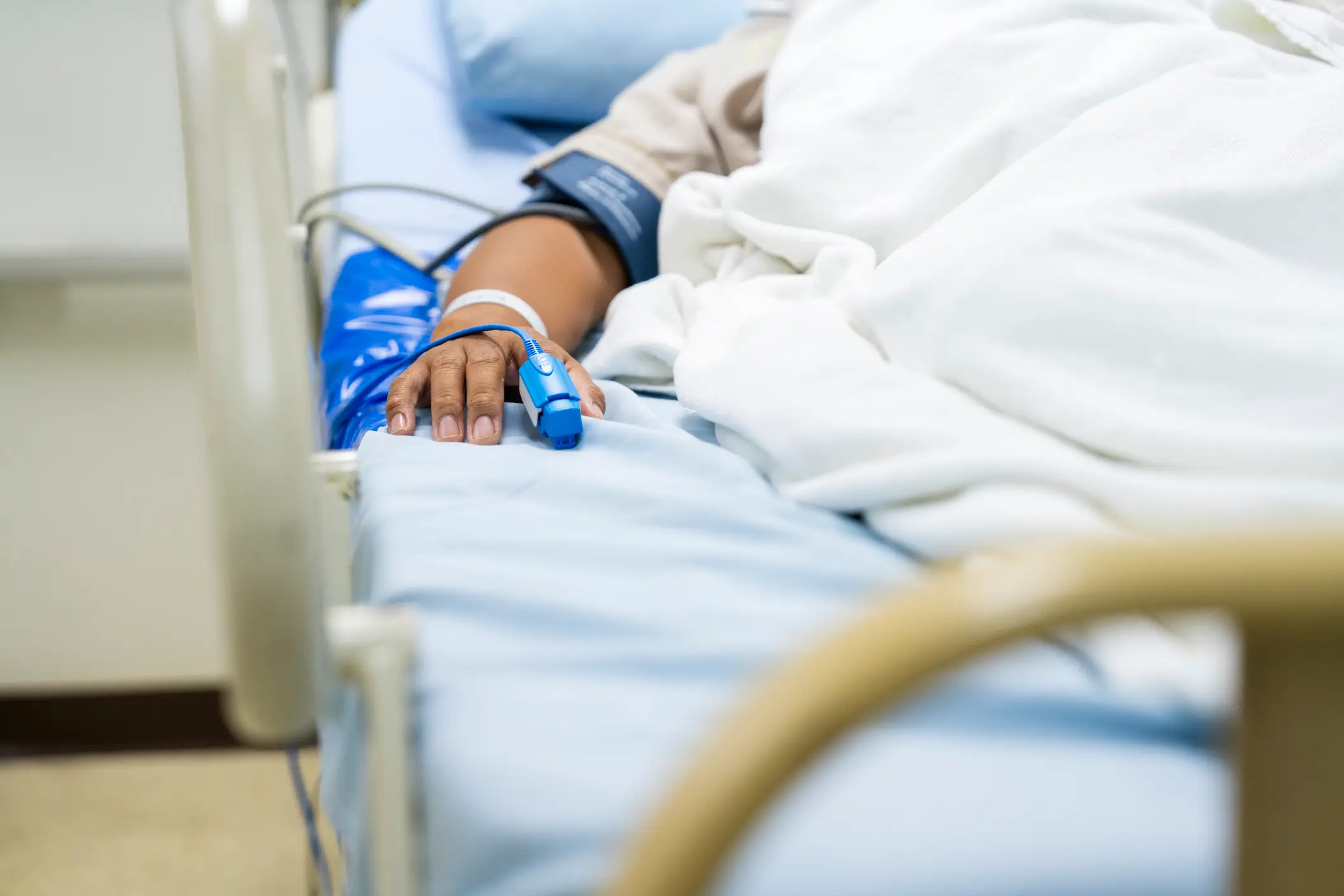
As per the NHS, brain death (also known as brain stem death) is when a person on an artificial life support machine no longer has any brain functions.
This means they will not regain consciousness or be able to breathe without support.
A brain-dead person is legally confirmed as dead, and they have no chance of recovery because their body is unable to survive without artificial life support.
The damage is too irreversible, and, according to UK law, the person has technically died.

This can be confusing because their life support machine will keep their heart beating, and their chest will still rise and fall with every breath from the ventilator.
The brainstem is the lower part of the brain that's connected to the spinal cord - part of the central nervous system in the spinal column.
It's responsible for regulating most of the body's automatic functions that are essential for life, including breathing, heartbeat, blood pressure and swallowing.
It also relays information to-and-from the brain to the rest of the body, so it plays an important role in the brain's core functions, such as consciousness, awareness and movement.
After brain death, someone can't remain conscious.
Appearing on the All Things Women's Health podcast to talk about the case, bioethicist Fr. Ryan McCarthy explained: "In the medical world, there's no exact agreement on what brain death is. I think everyone would agree that zero anything on an EEG, which is a measurement of electrical activity in the brain.
"So getting a zero across the board on all those is probably a safe definition of brain death."
Meanwhile, physician Nicole King also weighed in on the medical definition in an article on KevinMD earlier this year.
She stressed: "First and foremost, a brain-dead patient is dead. At the conclusion of the second brain death exam by a second provider, the time of death is called. The patient is dead. I truly do not know how to make it clearer for not only the layperson but also other medical professionals.
"Unless there has been clear permission granted by the next of kin for organ donation, the patient is cared for by the ICU nurses in a respectful and nuanced manner to honour the dead and maintain autonomy and dignity for the deceased."
The physician added: "Anything other than that is abuse of a corpse and illegal, immoral, and unethical."
You can donate to a fundraiser created for Adriana's family here.
Topics: News, Life, Health, Pregnancy, Parenting, Science, Explained, US News
 Madison Burgess