Little-known effects your period may be having on your hair and skin

We all know that periods have a lot more symptoms than we’re comfortable with, but what about when it comes to your hair and skin?
Of course, there’s a range of issues that plague us for up to a week each month, and longer if you’re prone to premenstrual dysphoric disorder (PMDD), or premenstrual syndrome (PMS).
You could have pains and cramps in your abdomen, your lower back, aches all over your body, lethargy, irritability and food aversion or munchies.
Advert
But your hair and skin could also be impacted too.
Why is your hair and skin affected by your period?
It’s all to do with your hormone fluctuations, according to Viva Eve.
According to the Clue app, ‘your skin and scalp change in response to hormonal variations occurring throughout your cycle'.
This can be difficult to manage as you’re also suffering with a loss of blood that’s making you feel bloated and uncomfortable.
It can also impact your nails too, and for those who have to deal with uterine fibroids, your hair and skin problems will be even more pronounced.
Your hair and skin might be more oily
So, this is all down to the moments before your period starts.
Your body will begin to produce hormones, like testosterone, which then goes on to create sebum.
Sebum is an oil that is usually in your hair and skin anyway, but the increase can leave you feeling like your hair is greasy no matter what you do, and your skin might break out in spots.
On the flip side, it could be the opposite.
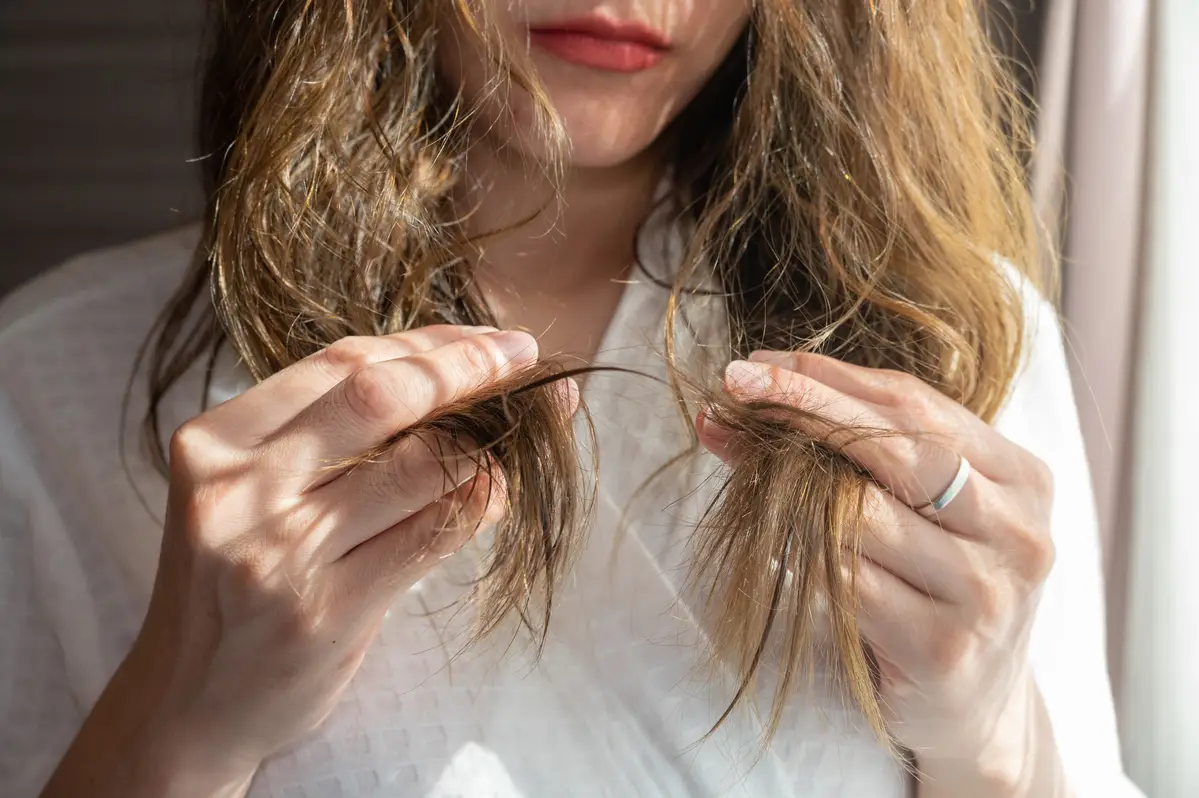
Your hair and skin could become dryer
Just as fate would have it, greasy hair could be swapped for brittle and dry hair and skin due to your body’s drop in oestrogen.
Thankfully, you can use deep-conditioners on your hair and apply moisturiser around the time of your period for a quick fix.
Of course, if your skin is inflamed around this time, opt for a sensitive lotion.
You might get enlarged pores and spots
You may notice enlarged pores and spots too.
Dr Ifeoma Ejikeme explained to Boots that this is all down to your hormones, which can give your dry patches, oiliness and clogged pores at different stages of your cycle.
Thankfully, she thinks that tweaking your skincare is key to helping you get through it.
She said: “Tailoring a skincare routine to your menstrual cycle can be helpful for managing some of the skin issues that can arise."
She recommends using 'products that contain salicylic acid' if you tend to experience congestion during your period.
Also, because of that pesky sebum, you’re likely to block your pores with oil.
Your scalp might be sensitive
This time, the hormone prostaglandin is to blame as it makes you more sensitive to pain.
So, your scalp might become painful if you’re not gentle during this time.
You lose more hair
A decrease in oestrogen can lead to hair loss, so make sure to be gentle and avoid putting your hair up in restrictive styles.
How to manage your hair and skin during your period
There are a few things you could do to help to manage these symptoms such as avoiding anything that could clog your pores.
Change your pillow cases so you’re not sleeping on bacteria, double-cleanse and use salicylic acid, exfoliate more, use a clay face mask, or have a facial.
For your hair, avoid chemicals on your head, and skip your colour appointment if you’re due to come on that week.
Topics: Beauty, Hair, Health, Periods, Women's Health
 Britt Jones