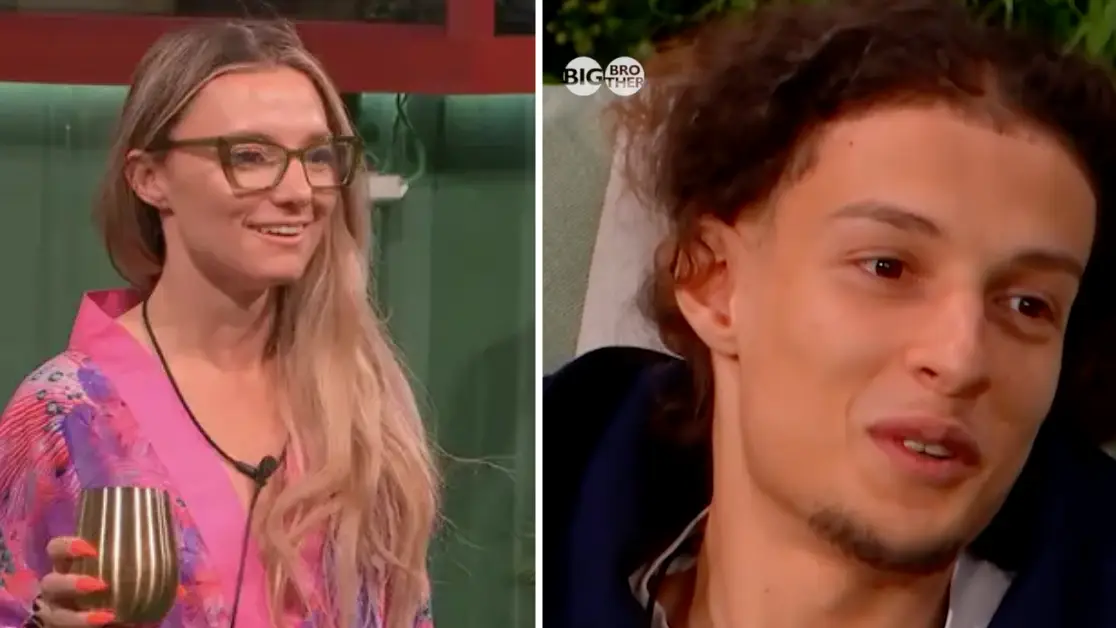
Big Brother argument sparks huge reaction as experts explain what it means to be a modern day witch

Big Brother UK’s newest housemate, Twinks Burnett, has sparked a major debate after identifying as a ‘witch’ upon her arrival.
On Friday (2 October), the 36-year-old from London joined the ITV reality show alongside teaching assistant Catrin Richards, 23, three weeks into the 2026 series as shock additions, following Johanne Cade's eviction.
Upon arrival, without really meaning to, Twinks in particular has caused quite the stir in the ultimate social experiment, finding herself in arguments with OG housemates Omar El Mayer and Phillip Regan.
During a chat with her housemates, Twinks revealed that she wasn't religious but did identify as a witch.
Advert
She said: "I believe in energy. I believe in the power of people. You know, I believe in, like, how can we believe it’s not just us out there, but I’m not, I’m not like classically, traditionally religious."
She also explained that the term 'witch' has a ‘negative connotation’ due to the patriarchy, as historically, women were often labelled with this term if they had opinions, didn't get married, or were LGBTQ+.
(WARNING: This clip contains strong language)
After the news of this spread around the house like wildfire, Omar approached her and told her that he’d ‘heard she was a witch’.
Twinks replied: "I'm just a powerful woman, babe. If you're scared of witches, you're scared of the matriarchy.
"I believe that all of my girlfriends, all of the women in my life, I believe are powerful witches in their own right, genuinely."
Omar, 21, said that, in his opinion, the word 'witch' has a negative connotation, and went on to ask her if she rides a broomstick or can turn people into frogs.
In Monday night’s episode (5 October), the argument escalated when Twinks tried to explain her point of view by comparing her spiritual path to Omar’s Muslim faith, and framed them both as personal belief systems. He took offence to this and told her not to compare ‘witchy stuff’ to his religion.
Understandably, this whole exchange has sparked a debate on social media, with many viewers confused over what Twinks actually means when she says she’s a witch.
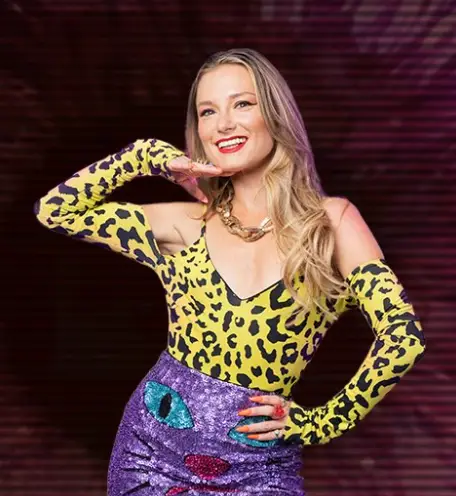 Big Brother has sparked conversations about what it means to be a 'witch' in 2026 (Instagram/bbuk/ITV)
What does it mean to be a modern-day witch?
Tyla spoke with expert Finbarre Snarey, who is the founder and curator of the British Tarot Archive, about the complex subject.
He told us that being a ‘witch’ doesn’t define a single belief system, but describes ‘a religious commitment, magical practice, personal spiritual path, cultural and/or political identity’.
Snarey told Tyla: “Twinks’ reported explanation emphasizes women's power and solidarity, she has stated she is not religious. We should use this explanation as a starting point for understanding her identification.
“Modern practitioners engage in ritual, seasonal celebrations, meditation, divination, herbal traditions, and working with deities. While many practitioners are part of a coven or established tradition, others practice alone.”
While Wicca is an influential modern Pagan religion, witchcraft does exist outside of this, and paganism, Wicca, and witchcraft ‘overlap but are not interchangeable’.
He outlined: “Therefore, when someone identifies themselves as a witch, it does not establish whether they worship a deity, perform spells read tarot or are members of any religious organization. These are questions concerned with their individual practice.”
Tyla also spoke with mythologist, storyteller and founder of Mythlok, Nitten Nair, who echoed that when someone says they identify as a witch today, our default mental imagery is ‘a woman riding on a broomstick’. However, that is not the case in the real world.
He explained: “Some people practise folk magic, non mainstream rituals, herbal traditions or nature-based spirituality.
“Outsiders generally connect it with Paganism or a particular religion. For practitioners, it is simply a personal identity and way of looking at the world.”
The expert continued: “This is quite different from the Western infused stereotype of the image of a witch. Most of us have grown up with the image of an old crooked woman, curses, potions and black magic.
“But what folklore from around the world documents is much more complicated than this.”
During his work at Mythlok, the expert says he has come across many different women from different cultures who identify as witches, and in reality, there ‘was never really one universal idea of what a witch is’.
He added: “Historically, in Western folklore, witches were often used to explain things people could not understand, like blaming a local woman for a sudden illness in the village. In Eastern folklore, they were healers, or provided the believers with an alternative route to fulfilment of their needs when mainstream belief failed them.
“In fact, modern witchcraft can be very different. It could very well be confused with the concept of a Shaman or a medium.
“The one thing that could still make the term ‘witch’ similar to what it originally meant is the fact that they chose a different route than what the masses did."
Nair concluded: “For me, as a mythologist, the interesting part is seeing how the meaning of 'witch' keeps changing and what that says about our beliefs today. The witch of today does not necessarily mean the witch people feared hundreds of years ago.
“It can be an old idea being understood in a completely new way. At least we are not picking up pitchforks against them and letting them exist peacefully among ourselves.”
Topics: Reality TV, Big Brother, Life, Real Life, Entertainment, Explained
 Madison Burgess