
'Diluvian' explained as 'bloody' scene in Ryan Murphy's new Lizzie Borden series leaves Netflix viewers shocked

It's been a few days since Ryan Murphy's new Monster: The Lizzie Borden Story hit Netflix, and it's safe to say it's sparked quite the reaction amongst viewers at home.
The eight-part true crime series boasts a star-studded cast including Ella Beatty as Lizzie Borden alongside Sarah Paulson as Aileen Wuornos, Charlie Hunnam as Andrew Borden and Billie Lourd as Emma Borden.
The series is best described as a 'loose interpretation' of the 1892 axe murders murder of Lizzie's father and stepmother, Andrew and Abby.
Advert
Now, Monster: The Lizzie Borden Story depicts Lizzie as the murderer, but the real-life Borden was actually acquitted of the murders at her trial in 1893, and the case has remained the subject of speculation ever since.
Regardless of the history, it's clear that the Netflix drama takes that uncertainty as a starting point, presenting a fictionalised account of the events surrounding the killings.
Check out the official trailer here:
Amongst 19th-century sex toys, secret lesbian affairs, and a whole load of vomiting is an ongoing reference to Lizzie's menstrual issues - something which fans were quick to pick up on.
One X user joked: "Watching Monster: The Lizzie Borden Story episode 1 on your period is a very 4DX experience."
"Lizzie Borden killing her parents on her period is funny asf. I’m sorry," penned a second.
A third chimed in: "I’m already taking issue with this Lizzie Borden series bc even a gush of period blood would not immediately clot through a big a** gown."
"Kinda poetic that I'm watching Lizzie Borden show and I just have started my period. Anyways, good for her," chirped another.
And a final X user penned: "Watching first episode of Lizzie Borden, and all I keep getting is Tampax ads. Funny cause the first episode focuses on her heavy periods."
In the series, Abby even describes Lizzie’s menstrual flow as 'diluvian', saying it is a more fitting description than 'heavy'.
The word comes from the Latin diluvium, meaning a great flood or deluge.
In this context, Abby is using it to describe Lizzie's unusually heavy menstrual flow.
Abby also refers to Lizzie’s period as her 'menses', which is a medical term for menstruation or menstrual bleeding, rather than the more everyday word 'period'.
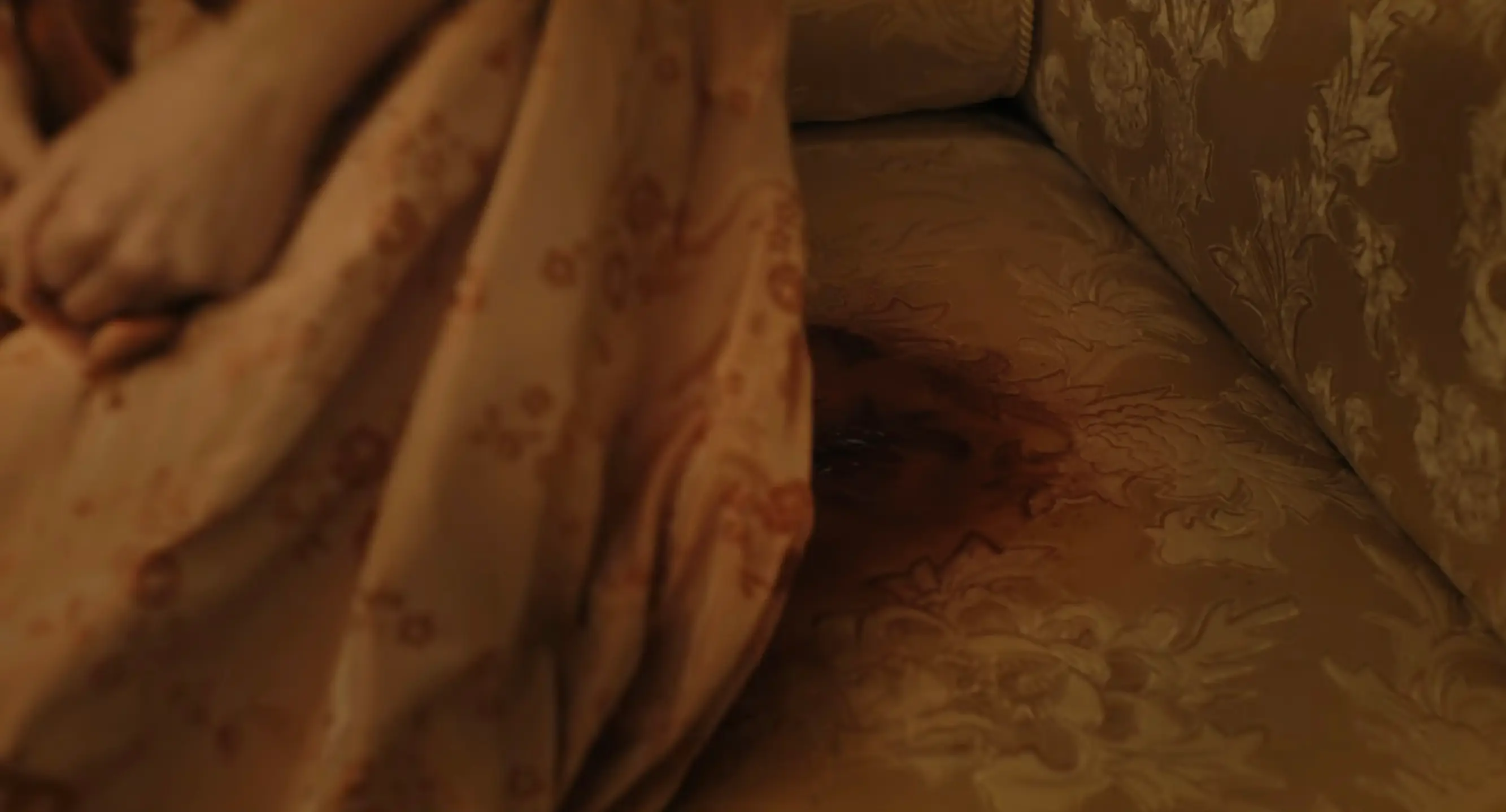
It's true that Lizzie's period plays a prominent role from the get-go, with the first reference being made in episode one.
She suffers painful cramps while speaking to a potential future husband and accidentally stains her stepmother’s expensive sofa with menstrual blood, prompting her family's prospective maid, Bridget 'Maggie' Sullivan (Vicky Krieps), to quickly clean the sofa and secure the job.
The storyline draws on a real detail from the 1892 Borden investigation.
When police searched the family home after the murders, they found bloody cloths in the basement and a spot of blood on Lizzie’s underskirt.
She said she was menstruating, a claim confirmed by the family doctor, and the police decided against investigating the bloodied cloths further.
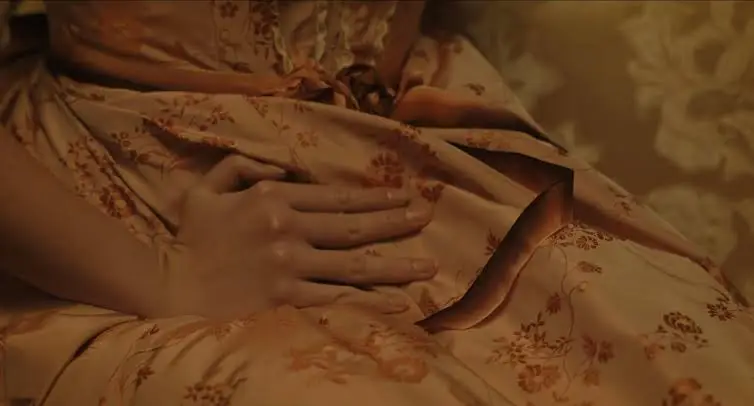
Menstruation also featured in Lizzie’s 1893 murder trial, with her defence describing her period as a 'monthly illness', a common Victorian euphemism for menstruation, and arguing that she was experiencing the effects of it around the time of the murders.
Her lawyer, George Robinson, described her as 'unbalanced' because her 'illness was continuing'.
Historical accounts also refer to Lizzie having 'peculiar spells' during her monthly cycle. While the exact meaning is unclear, these episodes could simply have reflected the hormonal changes associated with menstruation.
Lizzie was acquitted of the murders in June 1893.
Topics: Periods, TV And Film, Netflix, True Crime
 Rhiannon Ingle