
Three subtle signs of cervical cancer you shouldn’t ignore as Jersey Shore star Snooki shares diagnosis

Jersey Shore star Snooki has bravely opened up about her cervical cancer diagnosis.
The 38-year-old MTV reality star, real name Nicole Elizabeth LaValle, took to TikTok to share the news last Friday (20 February), explaining that the cancer is stage one and that she's grateful it's been caught early.
In the post, she told fans that she was diagnosed following a cone biopsy, which is where a cone-shaped piece of tissue is removed from the cervix and examined.
The mum-of-three told her followers: "It came back stage 1 cervical cancer called adenocarcinoma. Obviously not the news I’ve been hoping for, but also not the worst news just because they caught it so early. Thank freaking God!"
Advert
LaValle went on to share that her next steps are to get a PET scan to find out if the cancer has spread to other parts of her body, before potentially undergoing a hysterectomy to remove her uterus and cervix in order to avoid chemotherapy and radiation.

"I’m 38 years old, and I’ve been struggling with abnormal pap smears for three or four years now, and now look at me. Instead of putting it off because I didn’t want to go, because I was hurt and scared, I just went and did it. And it was there, cancer is in there. But it’s stage 1, and it’s curable," she assured fans.
What is cervical cancer?
The NHS explains that cervical cancer is cancer that's found anywhere in the cervix, which is the opening between the vagina and the womb.
Cancer Research UK's 2017 to 2019 data states are around 3,300 new cervical cancer cases in the UK every year, which equates to roughly nine every day.
It's most common in women aged between 30 and 35, but it can happen at any age, and anyone with a cervix can get cervical cancer.
Nearly all cervical cancers are caused by an infection from certain types of human papillomavirus (HPV), and in the UK, you can reduce your risk by attending your cervical screening from the age of 25, which aims to find and treat changes to cells before they turn into cancer.

Common cervical cancer symptoms
According to the NHS, the most common symptoms of cervical cancer are:
- Vaginal bleeding that's unusual for you - including bleeding during or after sex, between your periods or after the menopause, or having heavier periods than usual
- Changes to your vaginal discharge
- Pain during sex
- Pain in your lower back, between your hip bones (pelvis), or in your lower tummy
While such symptoms have a lot of crossover with other conditions, such as fibroids or endometriosis, which can regularly cause similar issues, it's important to be checked by a GP, especially if your symptoms change, get worse, or do not feel normal for you.
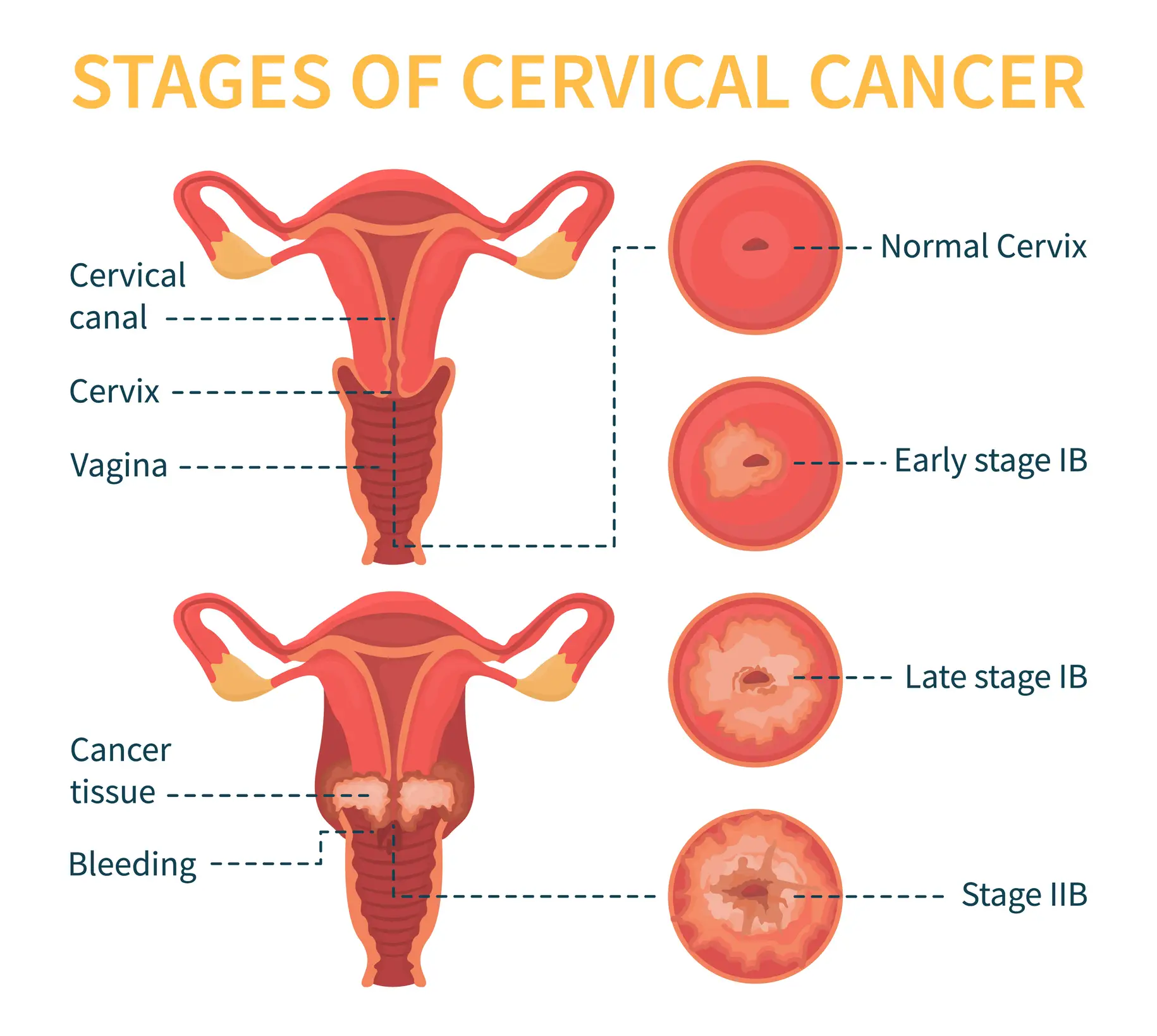
Less common cervical cancer symptoms
Medical experts have outlined a number of 'subtle signs' of cervical cancer to Prevention that women should be aware of, too.
Very little appetite or unintentional weight loss
As with many cancers, a drop in appetite or unexplained weight loss can raise concern.
A 2024 study published in JAMA found that unintentional weight loss was linked to a significantly higher risk of a cancer diagnosis within the following year.
On its own, this doesn't point to cervical cancer, but if it appears alongside several other warning signs, and you notice appetite changes or weight loss too, it is sensible to speak with your doctor.
Extreme fatigue
Now, as we know, fatigue can be a pretty broad symptom. While it shouldn't be used as a marker for cervical cancer on its own, still, like unexplained weight loss, it often shows up before and during cancer, according to the American Cancer Society.
It's important to note that this is not ordinary tiredness. With this extreme fatigue, you might feel drained even after rest or sleep, low or irritable, unusually weak, or unable to focus.
If that kind of exhaustion sits alongside other symptoms from this list, Prevention recommends flagging it with your doctor.

Leg swelling or pain
Pain or swelling in the leg can signal cervical cancer, though it tends to surface in later stages, said Christine Horner, M.D., a women's health advocate.
"Cervical cancer can spread to lymph nodes in the area between the hip bones. Cancer cells can also stop lymph fluid from draining away. This might lead to swelling in your legs due to fluid build-up. The swelling is called lymphedema," the expert outlined.
The National Library of Medicine notes that lymphedema may also stem from an inherited condition or a blockage in the lymphatic system.
You can find out more about cervical cancer on the official NHS website here.
If you’ve been affected by any of these issues and want to speak to someone in confidence, contact Macmillan’s Cancer Support Line on 0808 808 00 00, 8am–8pm seven days a week.
Topics: Cancer, Celebrity, Explained, Health, Life, Women's Health, Reality TV
 Rhiannon Ingle