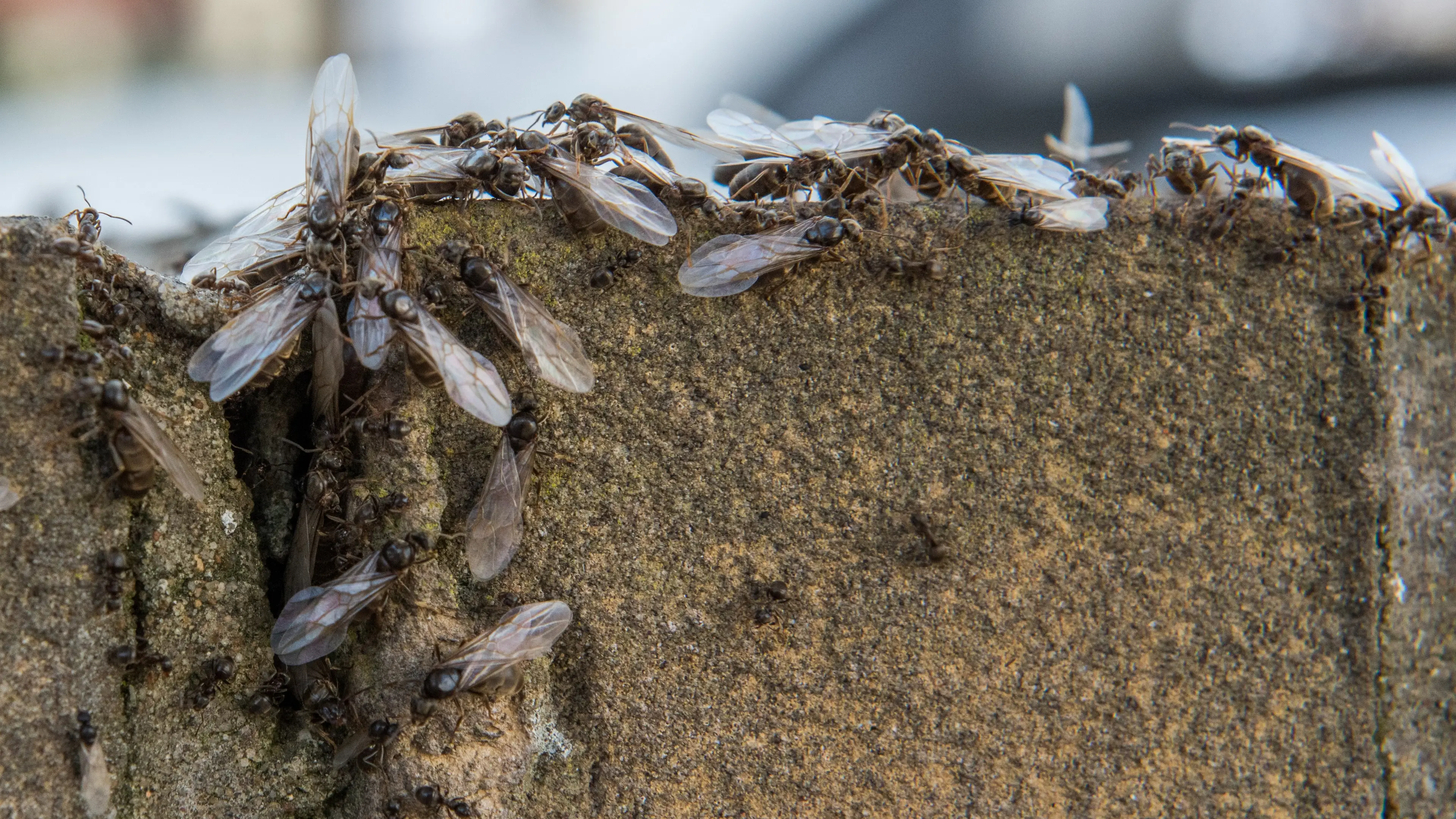
Flying ants are taking over the UK - here's the gross reason you’re seeing so many

Just when you thought summer couldn't throw anything else at the British population - on top of a heatwave and an outgoing prime minister - the skies are suddenly full of flying ants.
From gardens to train platforms, these bitter critters seem to be absolutely everywhere, including inside people's homes.
While the annual invasion can be frustrating, there's actually a fascinating (if slightly gross) reason why so many seem to have appeared all at once.
But what exactly are flying ants? How did this bizarre ant-fly hybrid emerge? And why are experts suddenly discussing them so much?
Advert
Well, firstly, flying ants aren't a separate species from the 'normal' six-legged ants that crawl along the ground.
It turns out, they're actually the reproductive members of common black garden ant colonies, with both males and young queens growing wings exclusively for mating purposes.
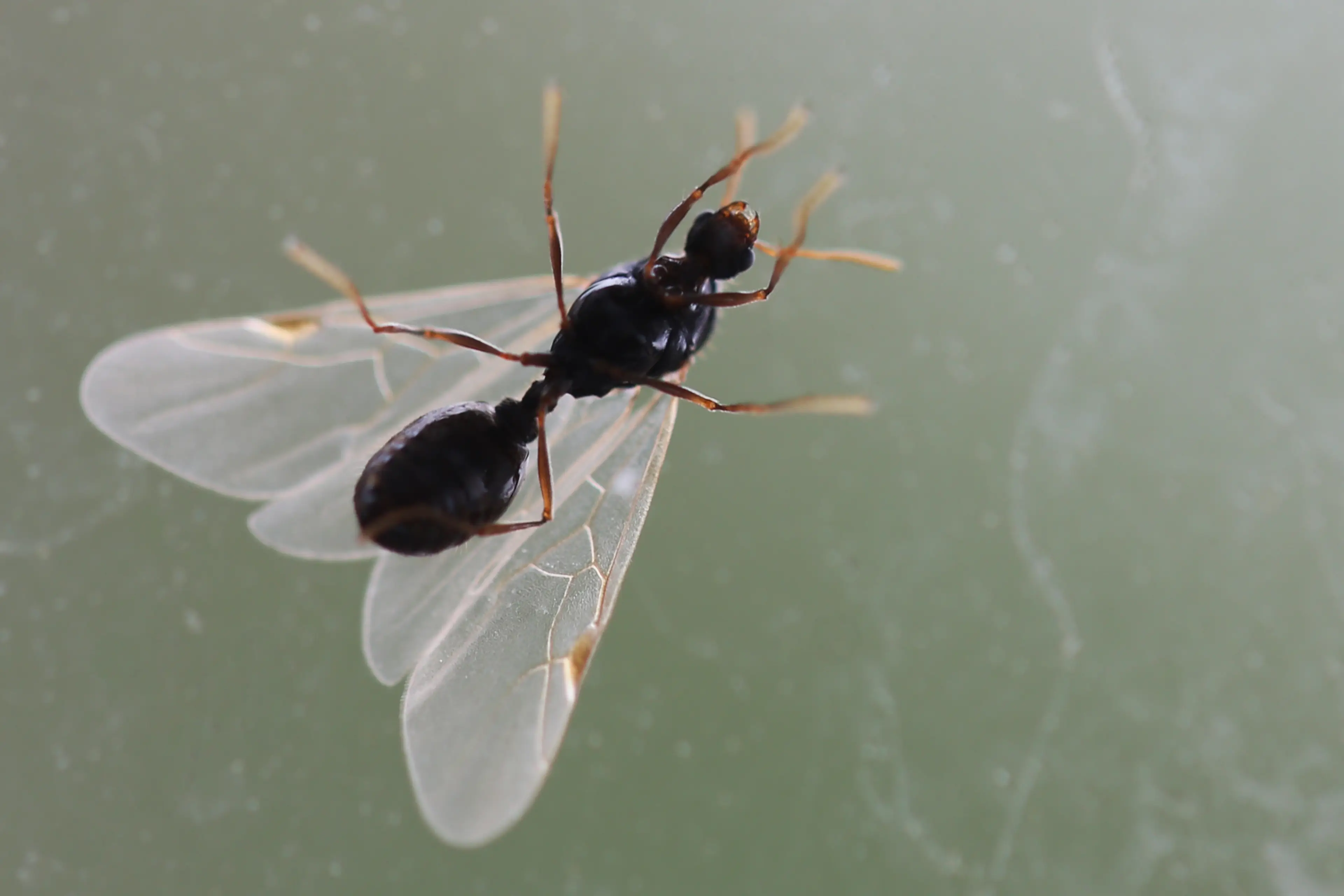
These flying pests emerge from hiding at the beginning of every British summer due to something called a 'nuptial flight'.
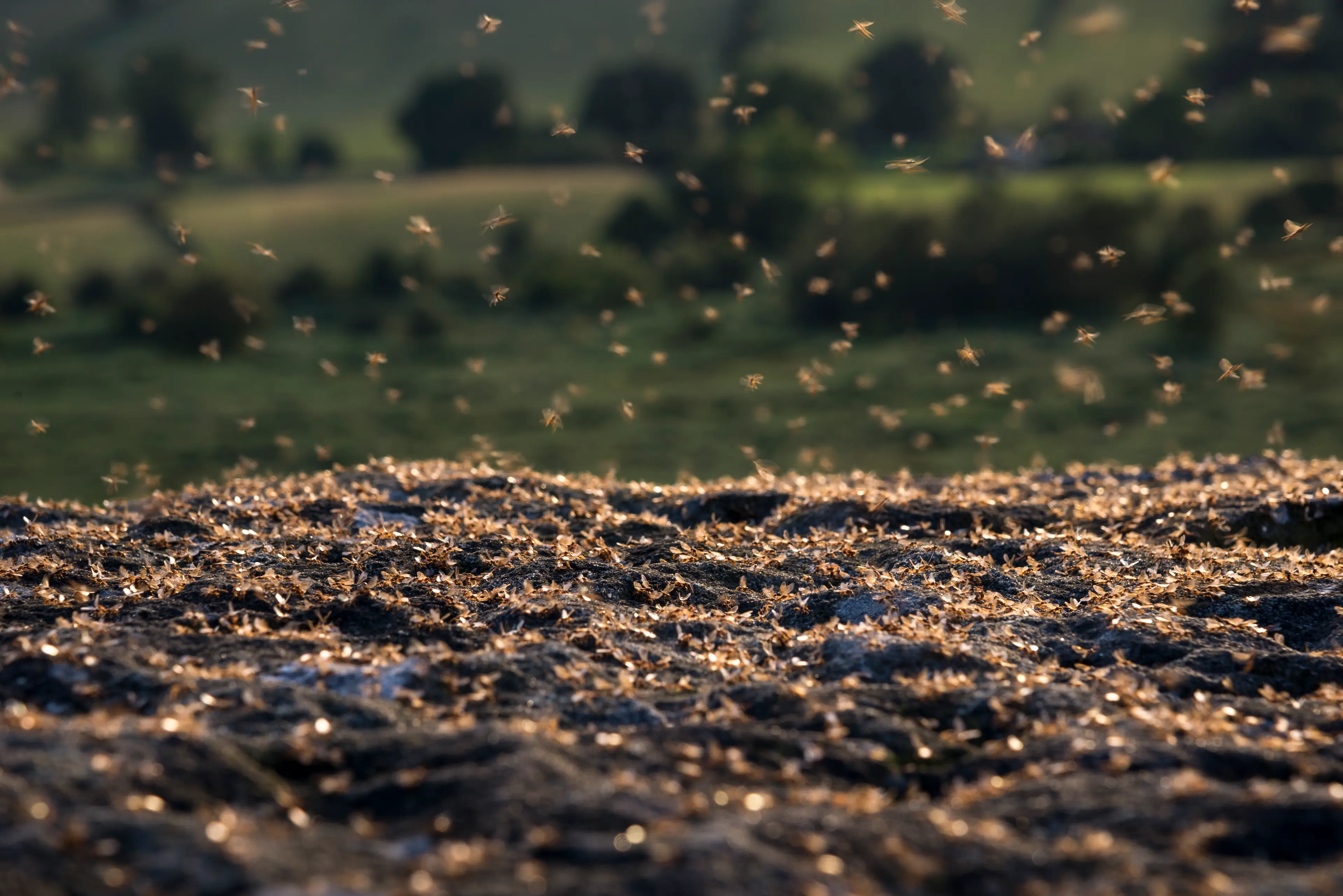
This is an annual event that describes one of the largest mass mating displays in the insect world.
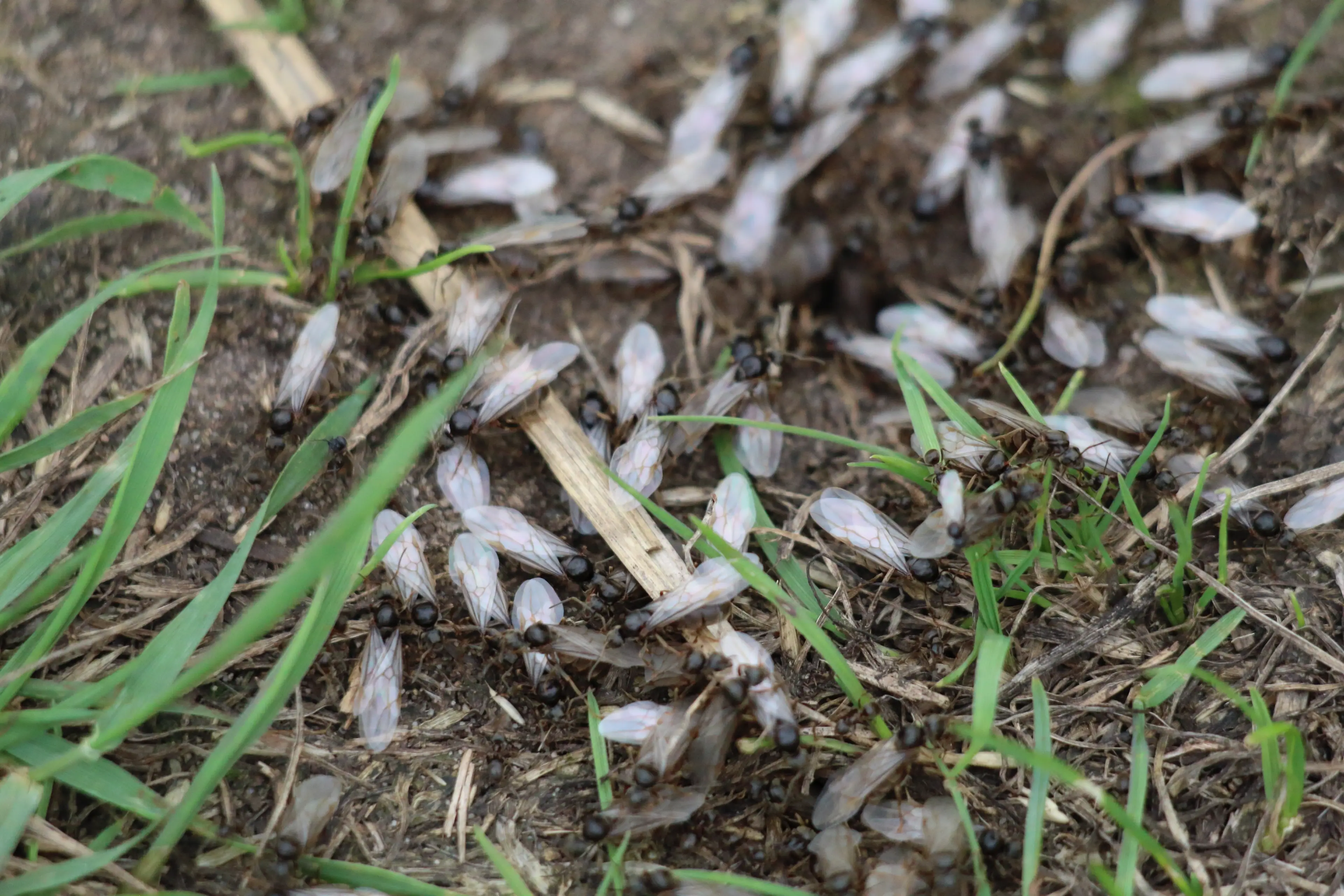
Rather than appearing one nest at a time, thousands of colonies release their winged ants during the same period.
When is Flying Ant Day?
As Professor Adam Hart, from the Royal Entomological Society, told the BBC: "Flying Ant Day isn't actually a single day, but a period during the summer when ant colonies in a local area release their winged males and queens to mate."
This eerie, synchronised behaviour, scientists believe, increases the chances of successful mating, while also making it much harder for predators like birds to eat enough ants to significantly reduce their numbers.
Apparently, these swarms are also heavily influenced by the weather.
So, it's no surprise they're rearing and ready to go while the UK is battling another major heatwave.
Warm temperatures, humid air and light winds create the ideal conditions for the insects to take flight, which is why they often appear after a spell of hot, muggy weather.
Professor Hart explained: "Warm weather is one of the key triggers for these flights, and a spell of higher temperatures, especially combined with low wind, provides ideal circumstances for colonies to take to the air."
Their emergence is often referred to as 'Flying Ant Day' - although it isn't usually limited to a single day.
The phenomenon usually reaches its peak around mid-July, though the exact timing varies depending on local weather conditions, meaning swarms can appear over several days or even weeks throughout the summer.
And with flying ants seemingly appearing earlier this year, the recent hot weather could well be playing a part.
Professor Hart said: "If we are seeing flying ants a little earlier this year - and I suspect we might - the recent warm weather is certainly a plausible explanation. Insects are strongly influenced by temperature, and warmer conditions can accelerate their development and bring important life-cycle events forward."
He was quick to point out, however, that it's important not to jump to conclusions based on just one year.
If you're able to take a closer look at them, you'll notice that male and queen flying ants aren't identical.
The males are usually smaller and slimmer, while the queens are much larger, given that they carry the energy reserves needed to establish a new colony once the dirty work is done.
And just when you thought the situation couldn't get any more gruesome, there's the fact that male flying ants drop dead as soon as they've fulfilled their mating purpose.
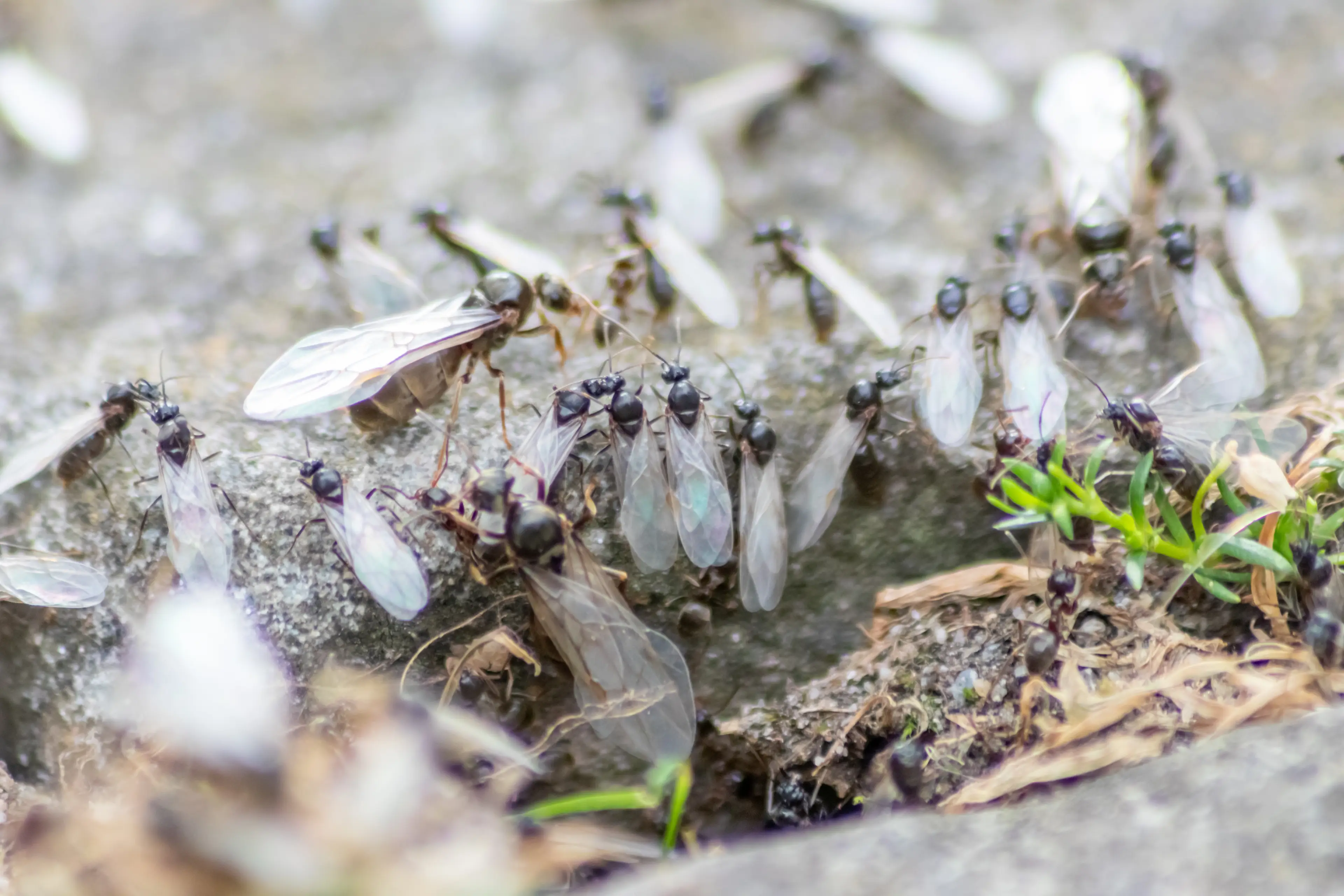
The fertilised queens, meanwhile, break or chew off their own wings before burrowing underground, where they'll lay their eggs and build new colonies.
You can sometimes spot their discarded wings scattered across pavements or garden paths after a swarm has been abandoned by a recently sexed-up queen.
As unnerving as they are, however, flying ants are considered by biologists to be a vital part of the ecosystem, providing food for birds and other wildlife while also helping ant populations remain genetically diverse.
So, while they might be the last thing you want flying into your open mouth this summer, these flying ant swarms are actually a sign that one of nature's biggest seasonal events is underway.
 Rhianna Benson