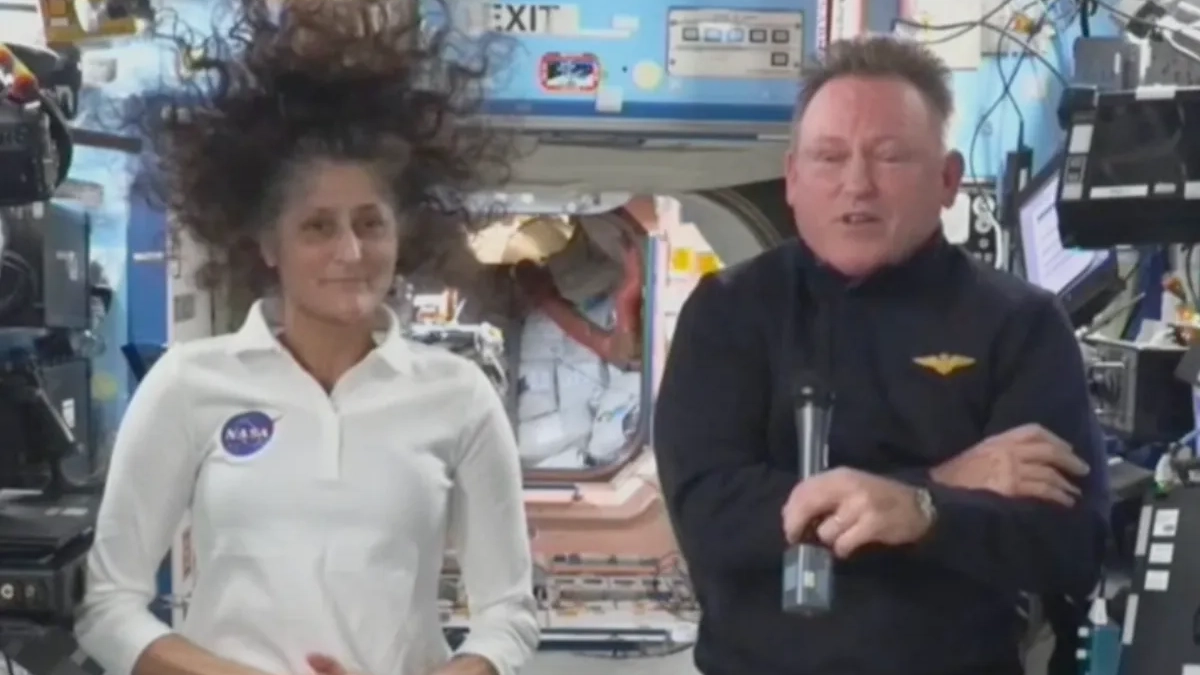
Doctor reveals frightening process stranded NASA astronauts will undergo after returning to Earth

The countdown is officially on for the rescue mission of the two NASA astronauts currently stranded in space.
But according to one doctor, Sunita Williams and Barry Wilmore's return to Earth won't be as simple as it sounds, and the pair could actually be forced to endure a lengthy rehab process following their journey.
Williams and Wilmore have been trapped onboard the International Space Station for nine months now, following a botched eight-day mission.
Advert
A number of technical faults - including fuel and helium leaks, dead manoeuvring thrusters, and a broken propellant valve - meant that the duo have been awaiting rescue since June of last year.
Elon Musk's space exploration firm confirmed last month that the stranded astronauts were now scheduled to be home around March 19 - two weeks earlier than planned.
During their time away from home, concern has mounted up surrounding the astronauts' health - particularly when it comes to their lack of muscle used as a result of microgravity.
According to the BBC, the lack of use of back, neck, calf and quad muscles can mean they begin to atrophy, and can even plummet by as much as 20 percent in just two weeks, and by 30 percent between 3-6 months.
The fact that neither Williams and Wilmore are putting their bodies through mechanical strain in space also means that their bones can demineralise and weaken.
With this in mind, medics have said this week that, following their upcoming return, the pair may initially struggle to walk on their own.
Due to the low gravity of the Earth's atmosphere compared to life in outer space, the duo could be transferred onto stretchers and rushed off to medical evaluations when their spacecraft lands, the doctors told the Mail.
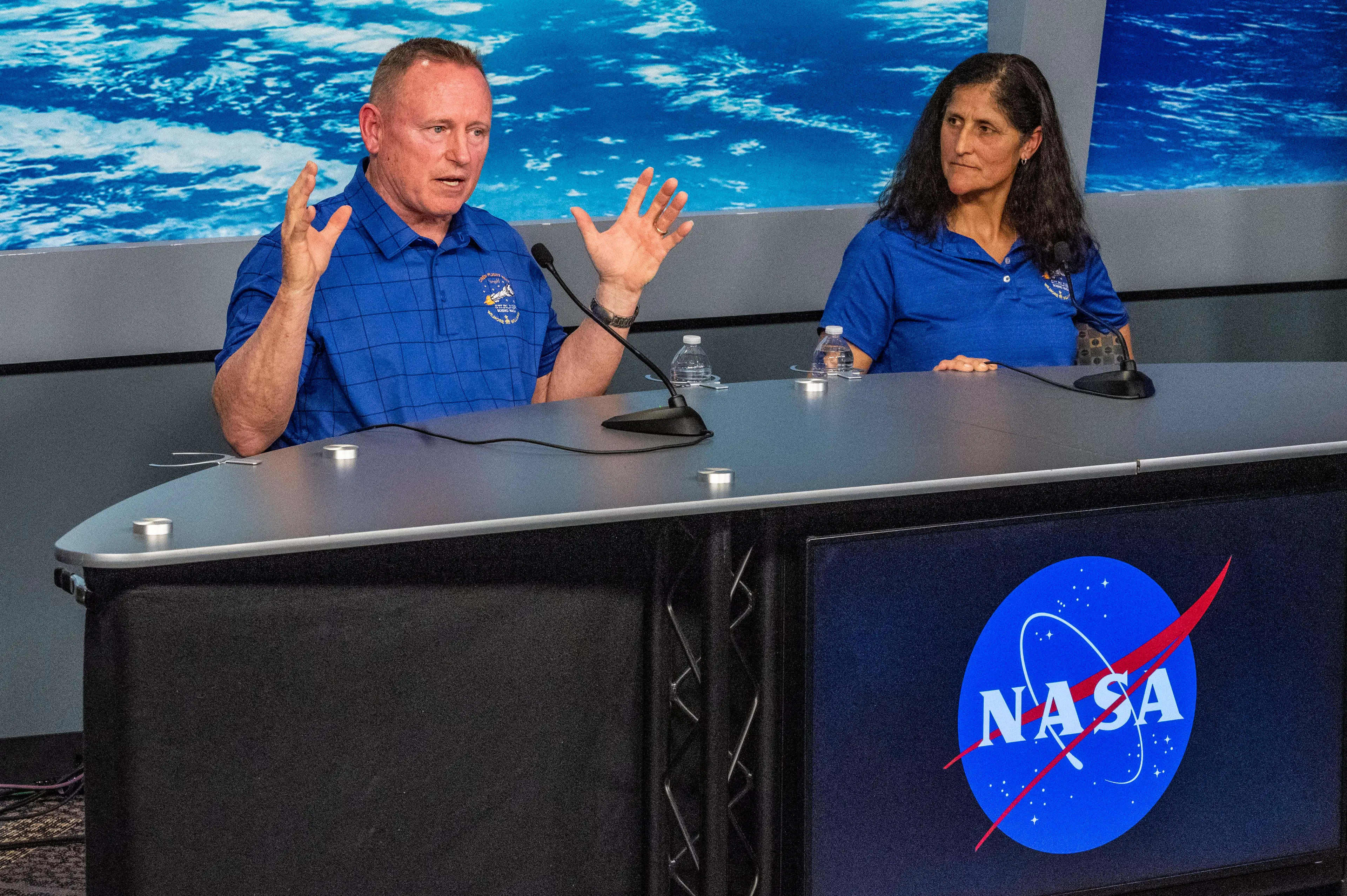
Speaking to the publication, pulmonologist and Air Force veteran Dr Vinay Gupta said the scientists could be forced to undergo six weeks of rehabilitation in a bid to regain their strength.
As well as guided exercise - focussing on muscle training and flexibility - put into place to see them readjusted to their home-planet's pressure, they'll also likely abide by a regimented diet.
Biomedical engineer Dr John Jaquish added: "The human body needs the Earth's gravitational pull, and in an absence of that, a lot of things are not functioning correctly."
Dr Gupta said the duo should also be screened for cancer, due to the extreme levels of space radiation they'd have faced during their time in space.
Being that one week in the ISS is equivalent to a year's worth of Earth's radiation, Williams and Wilmore have an increased risk of also developing damage to their central nervous system and any cardiovascular diseases.
"If I was their physician, I would think about a more proactive strategy for cancer screening," Dr Gupta explained.
"We want to take a different approach here, given that they had such a unique exposure history."
Tyla has contacted NASA for a comment.
Topics: Health, US News, Space, Science, Technology
 Rhianna Benson