tyla homepage
  • News
  • Life
  • TV & Film
  • Beauty
  • Style
  • Home
  • News
    • Celebrity
    • Entertainment
    • Politics
    • Royal Family
  • Life
    • Animals
    • Food & Drink
    • Women's Health
    • Mental Health
    • Sex & Relationships
    • Travel
    • Real Life
  • TV & Film
    • True Crime
    • Documentaries
    • Netflix
    • BBC
    • ITV
    • Tyla Recommends
  • Beauty
    • Hair
    • Make-up
    • Skincare
  • Style
    • Home
    • Fashion
    • Shopping
  • Advertise
  • Terms
  • Privacy & Cookies
  • LADbible Group
  • LADbible
  • UNILAD
  • SPORTbible
  • GAMINGbible
  • UNILAD Tech
  • FOODbible
  • License Our Content
  • About Us & Contact
  • Jobs
  • Latest
  • Archive
  • Topics A-Z
  • Authors
Facebook
Instagram
X
Threads
TikTok
Submit Your Content
Airport warning issued to travellers bringing any of these three pain-killers on to plane

Home> News

Published 13:31 19 Jun 2025 GMT+1

Airport warning issued to travellers bringing any of these three pain-killers on to plane

It's important to check the rules and regulations of the destination you're heading to

Madison Burgess

Madison Burgess

google discoverFollow us on Google Discover
Featured Image Credit: Getty Stock Image

Topics: Health, News, Travel, Mental Health

Madison Burgess
Madison Burgess

Madison is a Journalist at Tyla with a keen interest in lifestyle, entertainment and culture. She graduated from the University of Sheffield with a first-class degree in Journalism Studies, and has previously written for DMG Media as a Showbiz Reporter and Audience Writer.

Advert

Advert

Advert

Holidaymakers have been issued a warning against bringing certain types of painkillers to the airport as they could be met with issues when they arrive at their destination.

If you’re heading on a boozy party holiday, it’s to be expected you’ll be all stocked up on paracetamol and ibuprofen for when the dreaded hangovers hit.

Other popular medicines that Brits take abroad include antihistamines for hay fever sufferers, as well as motion sickness tablets for those who struggle with the travel elements.

You’ll be glad to know that all of these are of course fine, however, there are some stronger painkillers you need to make sure you leave at home.

Advert

It also depends where you’re heading, as different countries have different rules travellers need to abide by.
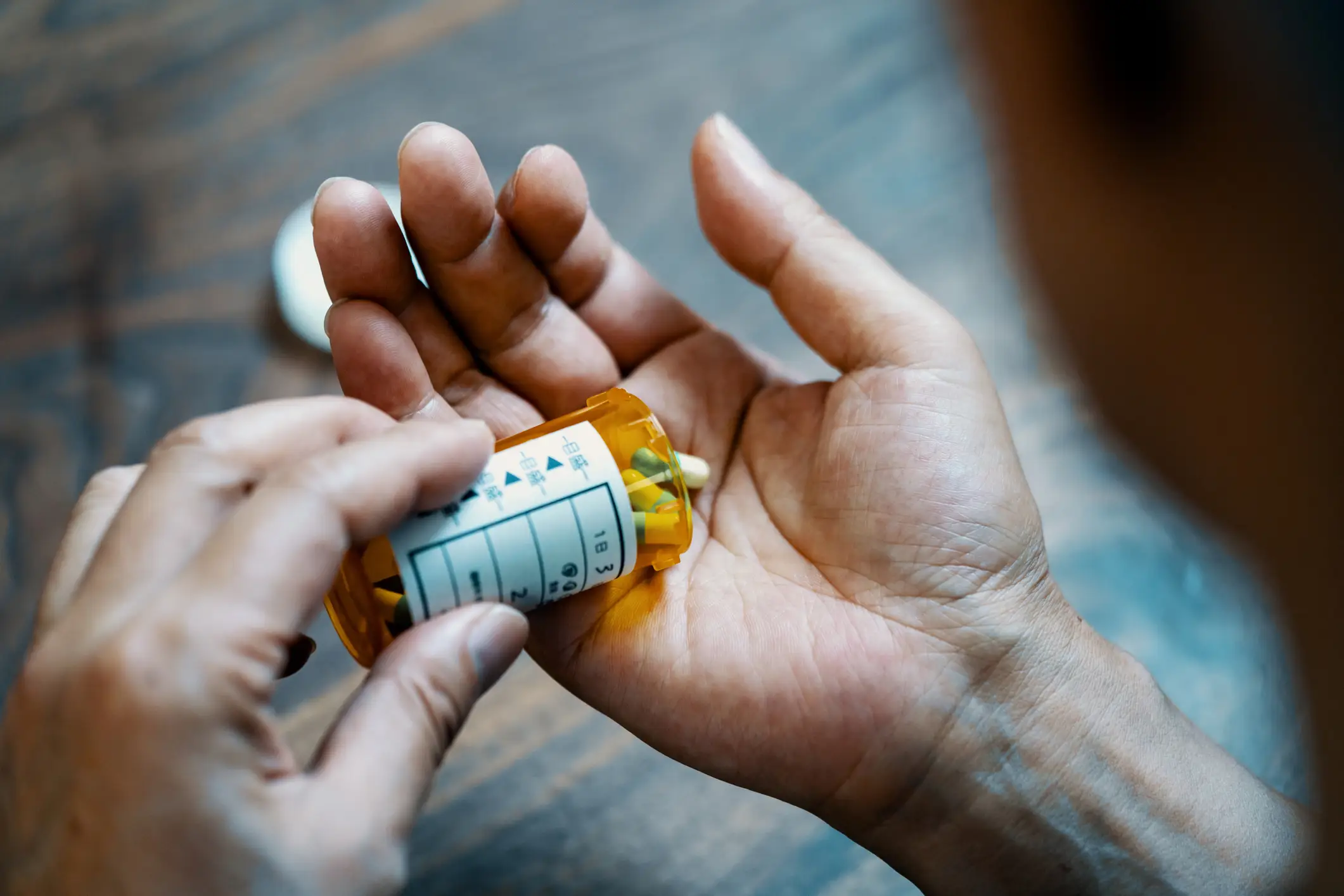
A warning has been issued to travellers who are planning to take medication on holiday (Getty Images/Trevor Williams)

You could get a fine or go to prison if you travel with medicine that’s illegal in another country.

First of all, it’s important to check that your pills are compliant with the UK’s Misuse of Drugs Act 1971 and are not controlled drugs.

If you do need to leave the country with medicine that contains a controlled drug, you will have to secure a letter from your doctor to prove its intended use.

The letter will need to include your name and a list of the medicine you have been prescribed, including doses, strength and frequency.

The Government website explains that it also must be evident that you are not carrying more than a 3-month supply and you’ll need the signature of the person who prescribed your drugs and their professional registration details.

If you are travelling abroad for longer than three months and need a longer supply of the drugs, you will need a personal export licence from the Home Office.

Now, onto three painkillers you need to be wary of and would need written permission for.

A lot of people aren’t aware that travelling into countries like Thailand and the United Arab Emirates with codeine could actually get you arrested, according to The Mirror.

Some popular examples of medicines that contain codeine include Nurofen Plus and Solpadeine.

The second and third strong painkillers that are prohibited in the same countries are morphine and tramadol.
Codeine is one of the drugs that's restricted in numerous countries (Getty Images/d3sign)

This is due to the potential for misuse and their reputation for being highly addictive.

And it’s not just these three drugs - it’s important to check the rules no matter which country you are visiting as they often have different regulations.

Other medications you need permission for include sleeping pills, anti-anxiety medication, and ADHD medication.

Greece, Japan, Mexico, and India are also known for being particularly strict on the drugs that are allowed in and how much of them you can bring.

So, if you’re planning a big holiday this summer, just make sure you do your research and get the right permissions before packing your bag!

Choose your content:

an hour ago
2 hours ago
  • Jim WATSON / AFP via Getty Images
    an hour ago

    NASA makes big mistake during Artemis II launch and invent whole new continent

    The Artemis II crew has been communicating with NASA's mission control on Earth, describing the 'phenomenal' views

    News
  • Kevin Mazur/Getty Images
    an hour ago

    Trump slams Bruce Springsteen as 'total loser' and 'dried up prune' following singer's criticism

    The 79-year-old branded The Boss, who has won 20 Grammy awards, a 'dried up prune' and a 'bad singer'

    News
  • (Guido Mieth/Getty Images)
    an hour ago

    ‘Cicada’ Covid victim reveals bizarre symptom they noticed after getting it

    A new account shows why this strain keeps worrying people

    News
  • Alex Brandon-Pool/Getty Images
    2 hours ago

    Donald Trump sparks theory that he doesn’t know where the moon is

    The 79-year-old US President praised the Artemis II astronauts for going 'beyond the stars'

    News
  • Doctor issues warning to any women wearing ‘cheap’ knickers
  • Urgent warning issued after E. coli outbreak linked to raw cheese
  • It’s actually illegal to be driving with these prescription drugs in your system after ban warning issued
  • Doctor urges women to never ignore these three symptoms despite medics claiming they’re 'normal'