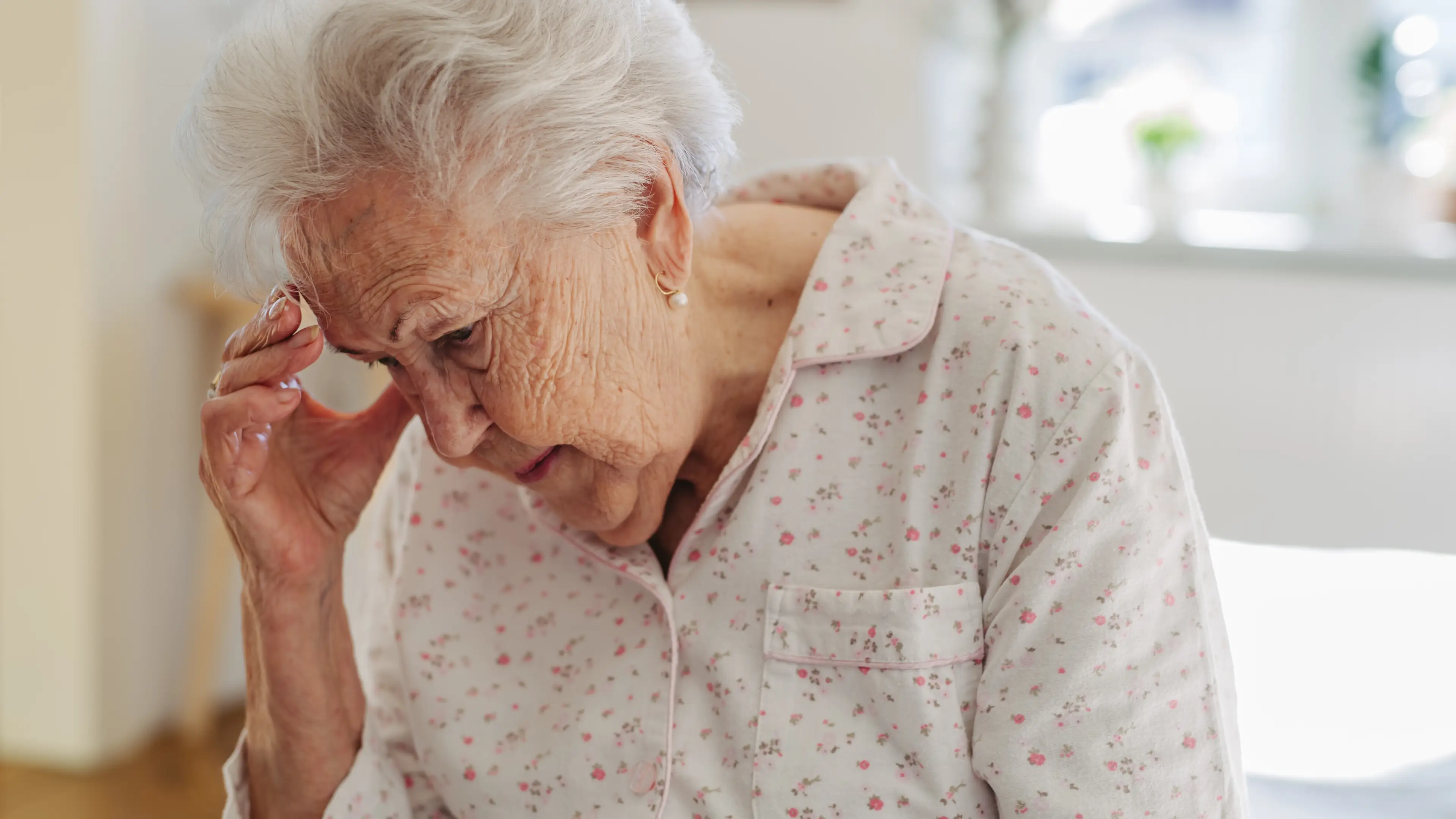
Scientists discover women with very common health issue have higher risk of dementia

Science has determined that some women can be at more risk of developing dementia in later life, and the clue could be in a common health issue.
According to the World Health Organisation, there are over 55 million individuals around the world diagnosed with dementia right now - and even more alarmingly, this figure is said to be on the rise.
A new study has identified that a common life stage women go through could throw up clues to if they will develop dementia in later life, and it's all down to the severity of their health symptoms.

Advert
Women encounter the menopause from various ages, usually from age 30 onwards and it's now thought that the more or more severe symptoms they experience during this stage, then the greater the chances of developing dementia later in life.
The new research was conducted by the University of Calgary, who then published their findings in the journal PLOS One. The research found that 896 postmenopausal women reported their perimenopausal symptoms and were then tested on their cognitive function. The study found that those with greater menopausal symptoms had higher scores for both cognitive tests, indicating a more severe decline and increased chance of dementia.
Zahinoor Ismail, M.D., professor of psychiatry, neurology, epidemiology, and pathology at the University of Calgary, discussed the results with Fox News Digital as he explained: "One of the most interesting findings was the association between menopausal symptom burden and mild behavioral impairment (MBI) symptoms — a syndrome increasingly recognized as an early indicator of dementia risk.
"These novel findings highlight the need to consider not only cognitive changes, but also mood, social interaction, and personality changes that emerge and persist in later life following menopause."
The study also looked at women who had hormone therapy e.g. HRT, which was found to bring out lower scores for cognitive health indicating a potential need to further study if this could be useful in the development of dementia or delaying it in future.
Ismail added: "Interestingly, participants who reported using estrogen-based hormone therapy during perimenopause had significantly lower mild behavioral impairment symptom severity."

The University of Calgary study isn't the only one to have examined the link between women's symptoms during menopause and the link to the onset of dementia in later life.
Alexa Fiffick, a family medicine physician specialising in menopause, has previously stated that data has indicated the higher the symptoms during this life stage then the decrease in cognitive function and possible signs of dementia.
Fiffick, from Ohio, also shared that a common menopause symptom of hot flashes can be associated with worsened cognitive function. She explained: "It is believed that the vasomotor symptoms are correlated with development of white matter hyperintensities in the brain, akin to what vascular dementia looks like on imaging.
"We have yet to obtain the data that treating VMS will prevent cognitive decline, but are hopeful that with menopausal hormone therapy and other non-hormonal options, we may be able to obtain this data in the near future."
According to the NHS, different variations of dementia affect individuals differently.
Though, the most common signs of the condition are the impact on cognitive function and memory loss, a difficulty in concentrating, a struggle to carry out familiar daily tasks, confusion over times and places and mood swings.
Topics: Health, Women's Health, Science, Menopause
 Niamh Spence