
tyla homepage
tyla homepage
  • News
    • Politics
    • Entertainment
    • Celebrity
  • Entertainment
    • Celebrity
  • Life
    • Animals
    • Food & Drink
    • Women's Health
    • Mental Health
    • Sex & Relationships
    • Travel
    • Real Life
  • TV & Film
    • True Crime
    • Tyla Recommends
  • Astrology
  • Beauty
    • Hair
    • Make-up
    • Skincare
  • Style
    • Home
  • Advertise
  • Terms
  • Privacy & Cookies
  • LADbible Group
  • LADbible
  • UNILAD
  • SPORTbible
  • GAMINGbible
  • UNILAD Tech
  • FOODbible
  • License Our Content
  • About Us & Contact
  • Jobs
  • Latest
  • Archive
  • Topics A-Z
  • Authors
Facebook
Instagram
X
Threads
TikTok
Submit Your Content
Doctor issues warning about several things you should never keep from your GP
Home>Life
Published 16:11 12 Jun 2026 GMT+1

Doctor issues warning about several things you should never keep from your GP

Family medicine professor Dr Ronald Epstein described open and honest conversations between GPs and patients as a 'shared responsibility'

Rhianna Benson

Rhianna Benson

google discoverFollow us on Google Discover
Featured Image Credit: Getty Stock Images

Topics: Health, Women's Health, Real Life, Advice, NHS

Rhianna Benson
Rhianna Benson

Rhianna is an Entertainment Journalist at LADbible Group, working across LADbible, UNILAD and Tyla. She has a Masters in News Journalism from the University of Salford and a Masters in Ancient History from the University of Edinburgh. She previously worked as a Celebrity Reporter for OK! and New Magazines, and as a TV Writer for Reach PLC.

X

@rhiannaBjourno

Advert

Advert

Advert

Despite the existence of doctor-patient confidentiality, it can sometimes feel tricky to open up to your GP without fear of being judged.

This is especially the case when attending an appointment for a sensitive or potentially intimate issue.

On the receiving end of a hard stare, you're asked a stream of questions in quick succession, and all of a sudden, your medical consultation feels like a police interrogation.

You feel the need to lie about your booze unit consumption to avoid sounding like an alcoholic, and answer 'no' to any and all smoke-related questions, so as to escape the disappointed side-eye of someone who's probably handed out dozens of cancer diagnoses.

Advert

No matter how awkward or judged we may feel answering these queries, however, one health expert has emphasised that patients must remain truthful about their lifestyle habits during GP appointments, for their own sake.
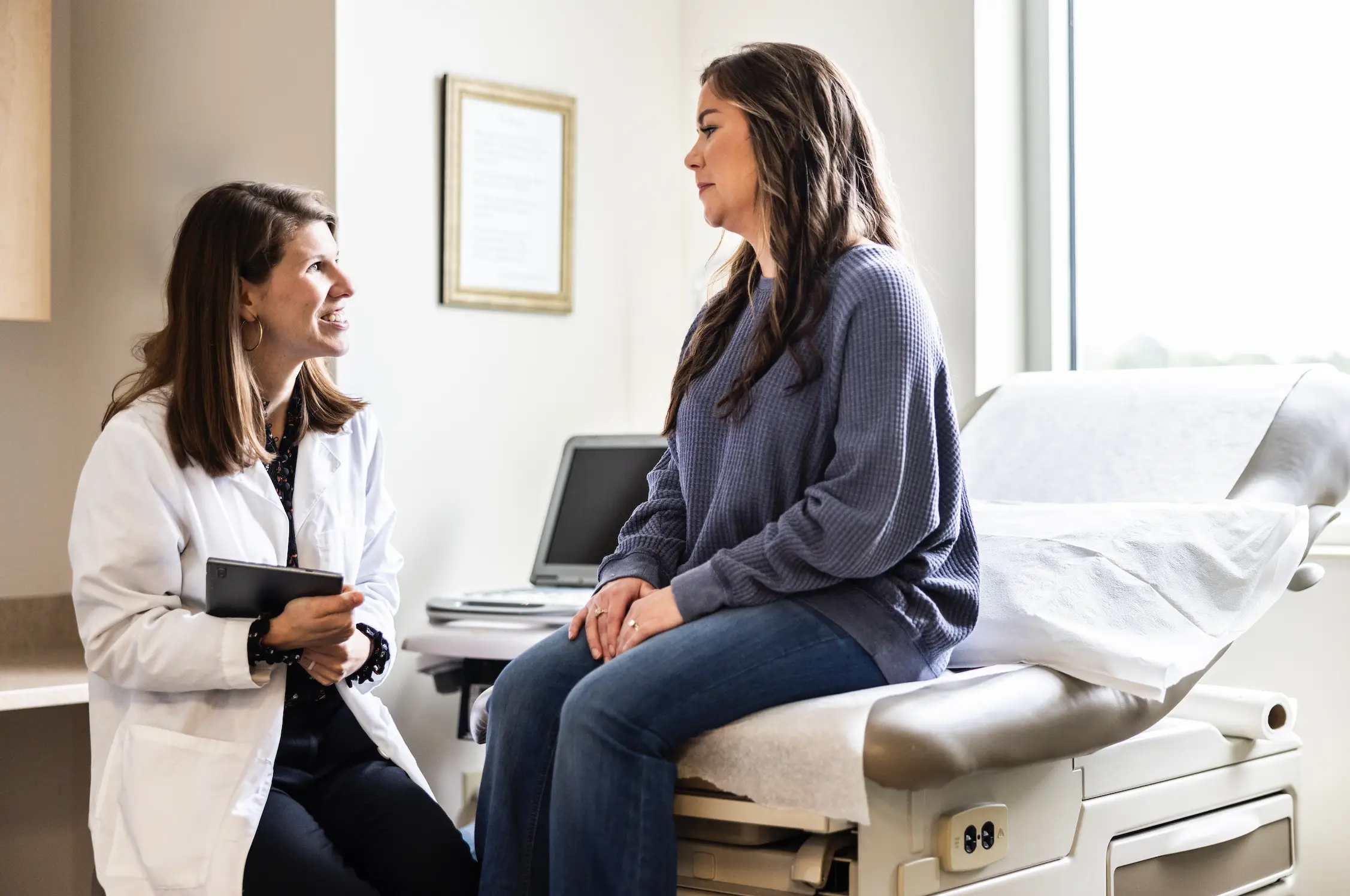
It's easy to feel judged during GP appointments (Getty Stock Images)

Health journalist Dylan Scott recently caught up with University of Rochester Medical Centre professor of family medicine, Dr Ronald Epstein, for Vox, who informed him that avoiding or lying in response to three particular questions during your next check-up could have serious long-term consequences.

Patients must be honest when medics ask them:

  • Which prescription drugs they’re currently taking
  • Whether they’re taking these drugs as described
  • If they're taking any other substances, either legal, like tobacco or alcohol, or illegal and potentially harmful, along with these prescription medications - and if they say 'yes', how and how often they're being used

"I think the key question for patients to ask themselves and for families to ask themselves is: Would withholding this information threaten or enhance the health of the person involved?" Dr Epstein explained.

Dr Epstein said there questions that require total honesty for health reasons (Getty Stock Image)

Elaborating on the three vital questions which require honest answers, he continued: "If the pills are something that if you miss a dose, you might suffer severe consequences, then it can be life and death."

That said, however, Dr Epstein also admitted that doctors need to be doing their utmost to provide an environment whereby their patients feel comfortable enough to answer such questions.

He described these discussions as a 'shared responsibility'.

"There are two aspects of any healing tradition," Dr Epstein noted. "One is the technical and instrumental pieces. That is the drugs you prescribe, the surgeries, the manipulations you do.

"The other is relational. That is the achievement of shared understanding, trust, confidence, and sometimes optimism so that people can really make decisions on their own behalf and feel empowered."

Choose your content:

4 hours ago
a day ago
7 days ago
  • Getty Stock/Canva
    4 hours ago

    What June's Super New Moon means for every star sign

    Gemini's New Moon is super-charged with 'social energy' - it marks your moment to speak up

    Life
  • David Cannon/Getty Images
    a day ago

    US Women's Open golfer who's seven months pregnant forced to stop mid-round after feeling contractions

    Madelene Sagstrom is expecting her first child, a baby boy, with her PGA caddie husband Jack Clarke

    Life
  • Getty Stock Images
    a day ago

    All the things causing you to wake up between 2am and 4am and what you can do

    Experts have shared their top tips on how to navigate the bizarre bedtime phenomenon

    Life
  • SWNS
    7 days ago

    Distressing condition leaves woman trapped in her room and forced to pee in a bucket

    She was diagnosed at 30, 24 years after she experienced her first symptoms

    Life
  • Doctor issues urgent warning about 'silent' disease common in celebrities as humid weather replaces heatwave
  • Doctor reveals early warning signs of ovarian cancer you should never ignore
  • Psychologist reveals two things you should never tell your partner
  • Doctor issues warning over ‘nightmare’ Christmas gift you should never get your kids