NHS advice on how to spot warning signs of choking after nine-month old baby dies

The NHS has issued official advice on the choking signs you should know after a nine-month-old baby tragically passed away due to choking on his lunch.
In 2021, Oliver Steeper died six days after he choked at Jelly Beans day nursery, in Ashford, UK - with an inquest into his death currently ongoing.
According to the inquest, Oliver's mother, Zoe Steeper, wanted to speak with nursery staff after concern that her son's food wasn't being pureed after finding pineapple chunks in his vomit.
Advert
She then received a call at about 11:30 the same day, saying that Oliver had choked on his lunch and was being seen by paramedics.
He was taken to the William Harvey Hospital before being transferred to Evelina Children’s Hospital, in London, where he later sadly died.
The National Health Services states on their website that gagging is a 'totally normal reflex' especially when babies 'start weaning', however, 'choking on food is dangerous'.
The difference between choking and gagging can be confusing to those who have not experienced either, however, there are a couple of key signs to look out for which helps to know If your child is experiencing a medical emergency or not.
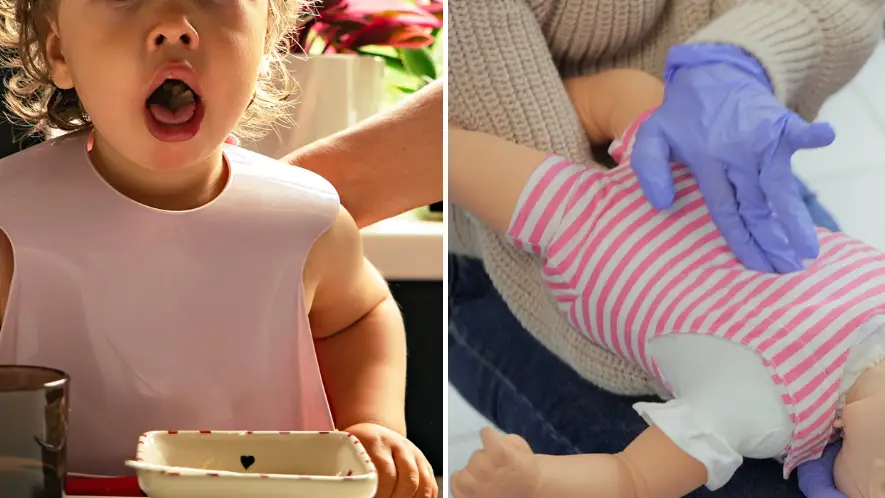
When a child is gagging, it can look like they are going to vomit, and they will often make loud sounds as they try to expel the food from their mouth with their tongue.
They may even make ‘retching movements’ and their eyes may water.
A very important note during the gagging stage is not to stick an object or your finger in their mouth to clear the food as their gag reflex should expel it naturally as they learn to navigate different foods and textures.
This is where choking differs greatly as when a child is choking, it’s silent.
If your chid has white skin, they may begin to look blue, which the NHS states is called ‘cyanosis’, and if your child has ‘brown or black skin, their gums, inside their lips, or their fingernails may begin to look blue.’
The NHS advice for a parent or caregiver who believes their baby is choking is to provide swift action.
The website states that there two things to do before administering sharp blows to the back:
- 1. Shout for help
- 2. Get them out of the high chair
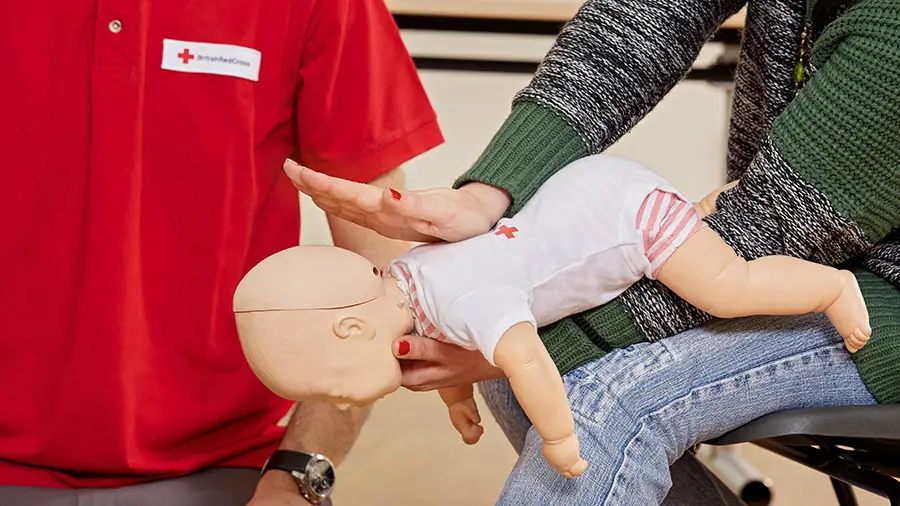
Then, you’ll need to ‘support their chest and chin with one hand and – with the heel of your hand – give 5 sharp blows between the shoulder blades.’
It should be carried out like this:
For choking babies and children, time is of the essence to get them the help they need.
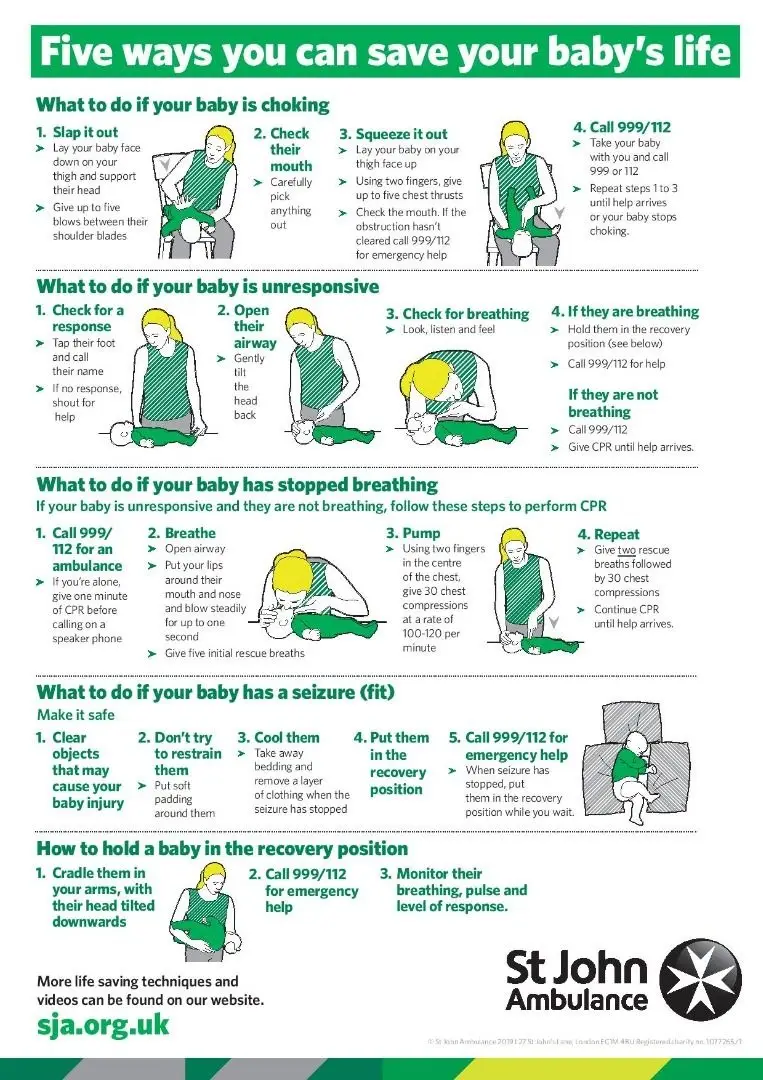
If you suspect your child is choking and you are unable to remove the food via the diagram guide, call 999 immediately.
If you're unsure about how to provide first-aid, the NHS links to the British Red Cross and St John Ambulance guidance and courses.
If you have experienced a bereavement related to the above story and would like to speak with someone in confidence, contact Cruse Bereavement Care via their national helpline on 0808 808 1677.
Topics: NHS, Health, Parenting, Food and Drink
 Britt Jones